
Mount Diablo tarantulas: where to see them this October
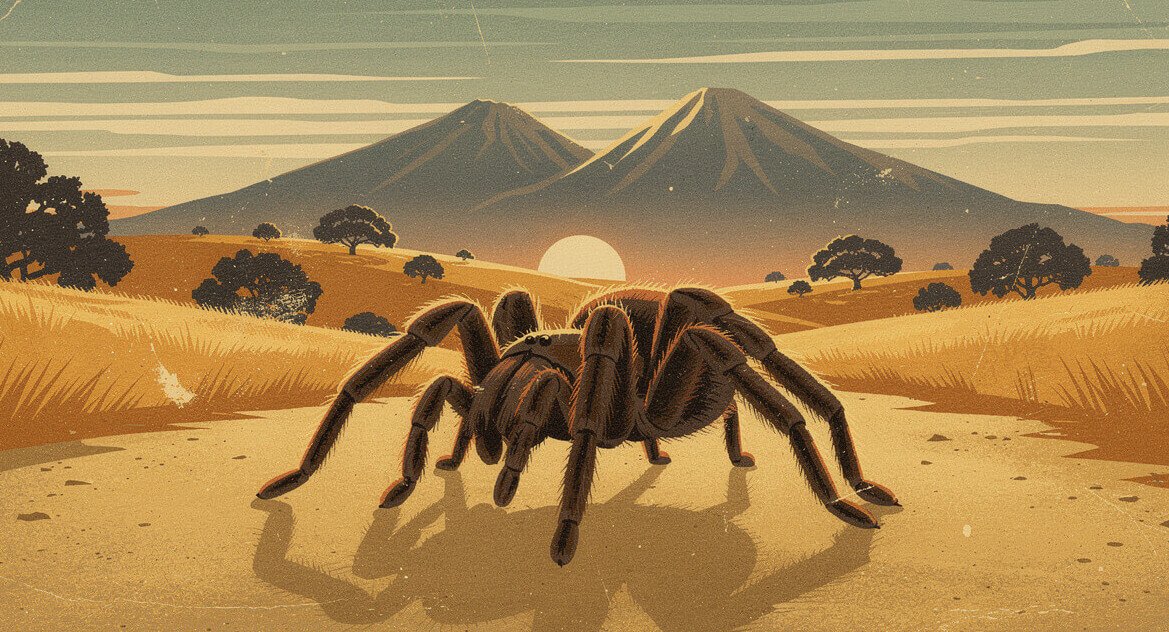
The Mount Diablo tarantulas are walking. Right now, through the end of October, the male tarantulas of the East Bay are leaving the burrows they have hidden in for most of a decade and crossing trails, fire roads, and the occasional parking lot. They’re looking for a female. They will not be back. If you have ever wanted to see a wild tarantula in California, this is the two-week window, and Mount Diablo State Park is the place everyone points to for good reason.
Here is the short version. The best single move this week is a ranger-led evening walk out of Mitchell Canyon on Saturday, Oct. 10 or Sunday, Oct. 11. If those are full, Henry W. Coe State Park throws its Tarantula Fest the same Saturday, and the East Bay Regional Park District runs evening treks at Sunol and Del Valle. Below: why the spiders are out, where to look on Diablo, the best spots beyond it, how to find one on your own, and how not to be the person who picks one up.
Mount Diablo tarantulas are out right now
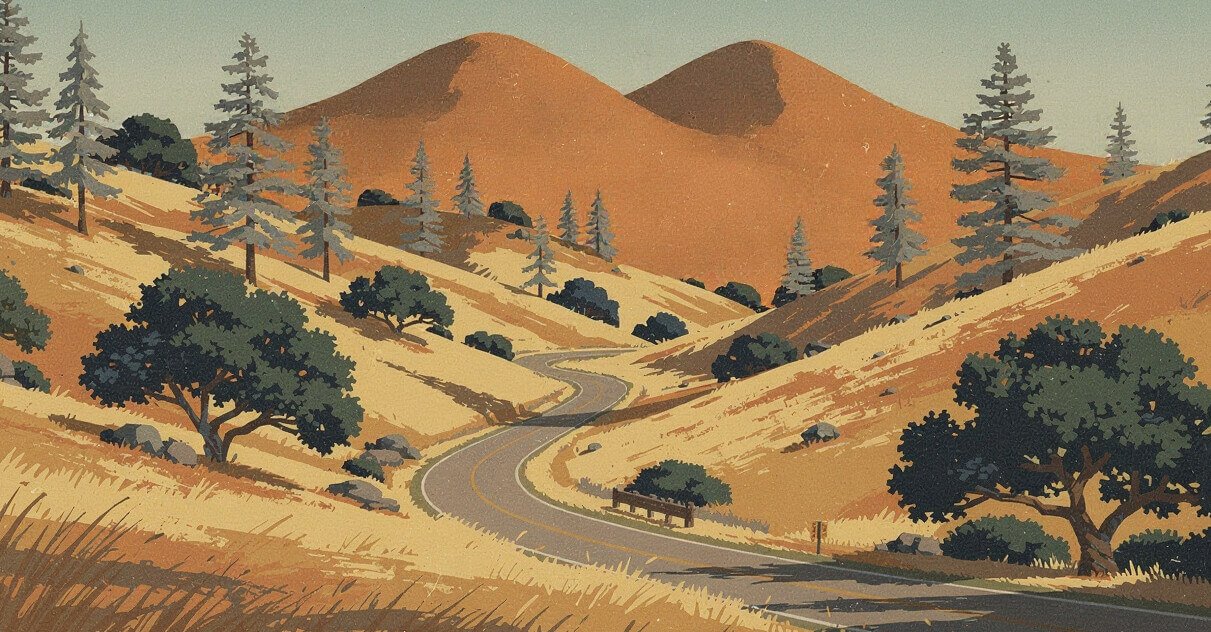
Every fall, the grass on Diablo goes the color of a paper bag, the afternoons cool off a little, and the hills start moving. The Mount Diablo Interpretive Association puts the season at mid-August to late October. Most naturalists say the real action lands in late September and the first half of October, which is exactly where we are. Some sources stretch the tail into early November, but don’t plan around the tail.
What you’re seeing is not a migration in the bird sense. Nobody is heading south. It’s a few weeks of mature males wandering the hills on foot, one at a time, each on his own search. Lauren Esposito, the curator of arachnology at the California Academy of Sciences, told KQED that the tarantulas people see crawling around this time of year are almost entirely males looking for a female’s burrow. The females stay home. They always stay home.
Why Diablo in particular? It isn’t the only place in the Bay Area with tarantulas. They live across the dry oak-and-grass hills of Contra Costa, Alameda, and Santa Clara counties and down the Diablo Range. But Diablo has the combination that makes sightings easy: a big state park full of open grassland, roads and trails that cut right through tarantula country, and a crew of naturalists who have been running tarantula walks there for years. Visit Concord calls it the local “hot spot,” and nobody in the East Bay would argue.
Know the clock before you go
Mount Diablo State Park’s gates open at 8am and close at sunset, and the park asks visitors to be in their cars and heading out by sunset so they don’t get locked in. That matters, because tarantulas are most active as the light goes. Your options inside the park are the last couple of hours before sunset on your own, or a guided evening walk that has the park’s blessing to stay out later. There’s a vehicle day-use fee, so bring a card.
Why the males are walking: a once-in-a-lifetime trip
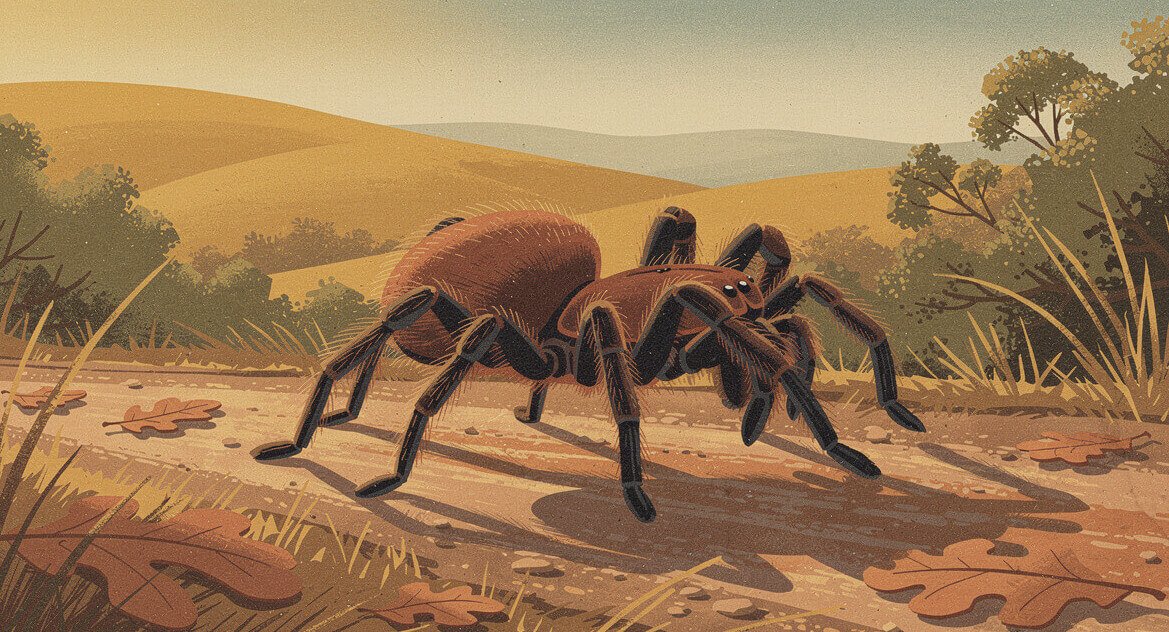
The tarantula you see crossing the North Gate Road pullout has been underground for years. According to the MDIA, East Bay tarantulas take somewhere between four and seven years to mature, and other sources stretch that number toward a decade. Then, in late summer, a male lays down a sheet of silk, splits his old skin, and climbs out of it one last time. That final molt gives him small hooks on his front legs. He’ll need them.
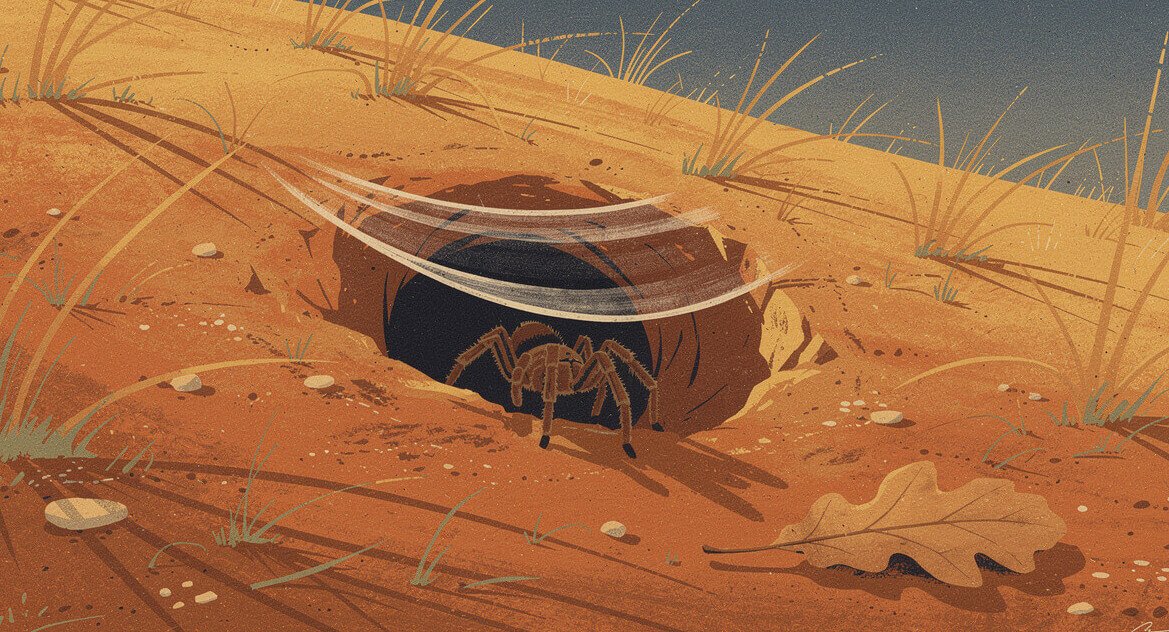
Then he walks. The MDIA says a male may cover as much as a mile looking for a female, probably following her scent. When he finds a burrow with a fresh silk curtain over the entrance, he taps on the silk to announce himself, essentially saying “not lunch, not a threat.” If she comes out, he uses those front-leg hooks to hold her fangs safely out of the way while they mate. Then he backs off and goes looking for the next burrow.
He keeps that up for the rest of the fall. He doesn’t really eat, and he won’t see winter. The female goes back underground, and in late winter or spring she spins a silk egg sac holding roughly 100 to 150 eggs. The spiderlings scatter within days, and the survivors dig their own burrows and start the long wait. Females are the long-haul players: the MDIA says they can live as long as 25 years in the same burrow, and Bay Nature notes captive females topping 30.
What kind of tarantula is it?
At Diablo, the species is usually identified as Aphonopelma iodius, which Bay Nature calls the Bay Area blond tarantula. If you see older writeups using A. smithi, that name has since been folded into A. iodius. South Bay open space managers call their local spider the California ebony tarantula, and the National Park Service at Pinnacles says the species there is still awaiting a formal published name. Tarantula taxonomy is a work in progress. The spider doesn’t care.
Are they dangerous?
No. California State Parks describes a bite as causing mild symptoms, less than a bee sting, and they rarely bite at all. The real defense is on the abdomen: tiny barbed hairs that a stressed tarantula can flick off. The MDIA says those cause itching and watery eyes, which is a very good reason to keep your face, and your dog’s face, out of the way. These are slow, gentle animals. The scariest thing about them is the reputation Hollywood gave them.
Where to see Mount Diablo tarantulas: start at Mitchell Canyon
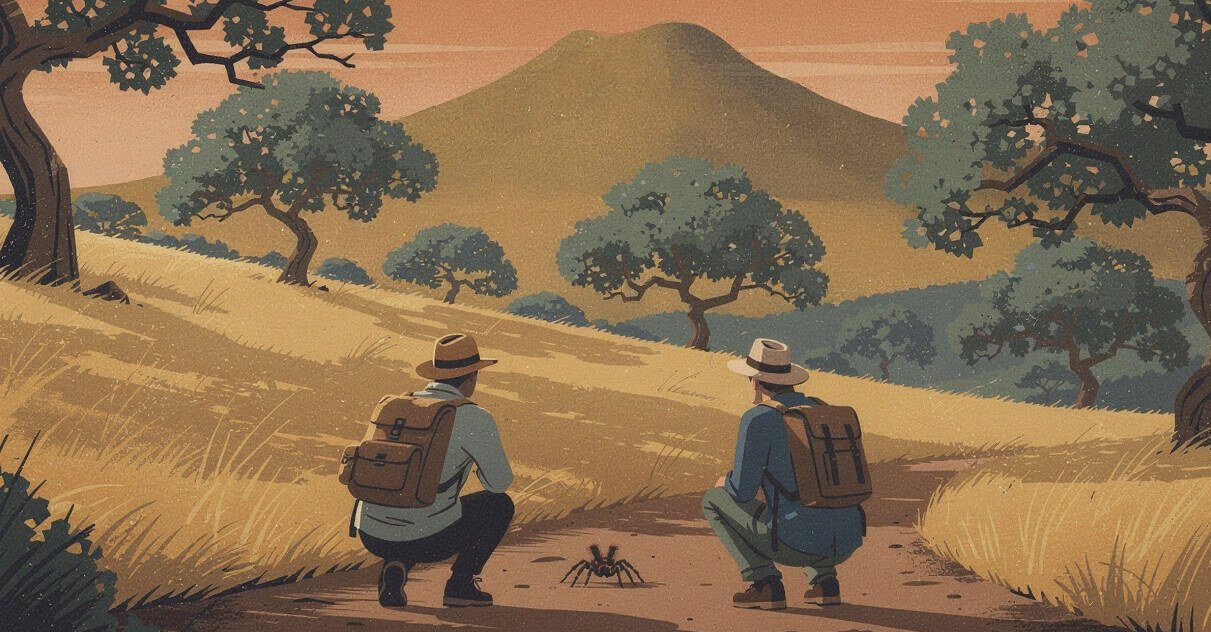
If you only go to one place on the mountain, go to Mitchell Canyon, on Diablo’s north side above Clayton. It’s where the people who know these spiders best start their walks, the trailhead sits right in the grass-and-oak country tarantulas favor, and the visitor center at 96 Mitchell Canyon Rd gives you a real place to meet up instead of a turnout on a switchback.
1. The MDIA evening walks (best bet this week)
The Mount Diablo Interpretive Association runs a walk called “How I Learned to Love Tarantulas,” and two dates are left on its calendar: Saturday, Oct. 10 and Sunday, Oct. 11, 4:30 to 6:45 PM, starting from the Mitchell Canyon Visitor Center. Reservations are required, so book before you drive. This ranks first because it solves the clock problem. You’re out in the golden hour and into dusk with a naturalist, inside the rules, at the hour the males are most likely to be moving.
How good are the odds? Save Mount Diablo’s own writeup of a family tarantula trek out of Mitchell Canyon on Sept. 5, 2025 counted three wild tarantulas and 17 scorpions lit up under black light. That was early in the season. October walks have the calendar on their side. Save Mount Diablo and Lindsay Wildlife both ran their own tarantula hikes this year too, but their 2026 dates are done or sold out, so MDIA is the one still on the board.
2. The roads and pullouts on your own
Hikers who go looking on their own tend to report sightings on and beside the park roads and pullouts in the last stretch of daylight, since a dark spider on pale pavement or a dirt shoulder is about the easiest thing in the park to spot. If you drive in from Walnut Creek on North Gate Road, go slow, scan the road edge, and pull fully off before you get out. Then head out before the gates close. If you want the dusk show, that’s what the guided walks are for.
3. Mitchell Canyon on your own
Mitchell Canyon is also a perfectly good solo walk in the late afternoon. The Mitchell Canyon Fire Road starts wide and gentle, and the grass on either side is tarantula country. Walk slow, look at the trail ahead of you, not your phone, and give yourself enough time to be back at the car by sunset. A tarantula sighting is never guaranteed. Even on a quiet day, you’re out in the best light of the year on the mountain that anchors half the East Bay’s skyline.
While you’re in the neighborhood: Diablo is the mountain on the horizon from a surprising amount of Northern California, including some of the tasting rooms in our ranking of Lodi wineries, and East Bay morning coffee is covered in our best coffee in Oakland guide.
The 5 best places to see tarantulas beyond Mount Diablo, ranked
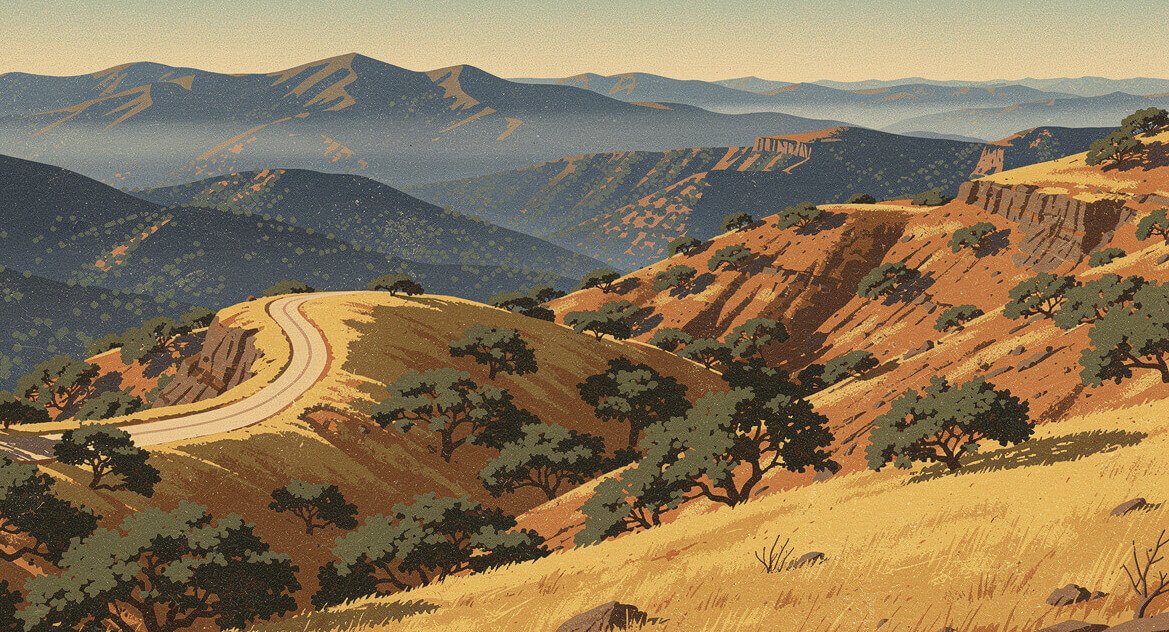
Diablo gets the headlines, but tarantulas live all along the Diablo Range and the dry hills around it. Here’s where we’d go next, ranked by how likely you are to see one this month and how good the trip is even if you don’t.
1. Henry W. Coe State Park, Morgan Hill: Tarantula Fest
Coe is the largest state park in Northern California, a huge, steep sprawl of oak ridges east of Morgan Hill, and on Saturday, Oct. 10, 2026 it throws Tarantula Fest at the Coe Ranch headquarters. The Pine Ridge Association lists live tarantulas and snakes up close, birds of prey and other local wildlife from the Wildlife Education and Rehabilitation Center, talks from experts, and volunteer-led hikes to look for tarantulas in their actual habitat. Entry to the festival is free, with a parking fee. It ranks first outside Diablo because it’s the one day of the year that’s built entirely around the spider, and it’s a fine first trip to Coe if you’ve never made the drive.
Insider detail: the headquarters entrance is reached via East Dunne Avenue from Highway 101, and the park describes the last stretch as about 10 miles of narrow, winding road. Leave early, take the curves slow, and watch the shoulder on the way up. That road is tarantula habitat too.
2. Sunol Regional Wilderness: Tarantula Treks
Sunol, off Calaveras Road in southern Alameda County, has two evening Tarantula Treks left on the East Bay Regional Park District calendar: Sunday, Oct. 11 at 5:45 PM and Sunday, Oct. 25 at 5:15 PM. Registration is required. It ranks second for the second date alone: Oct. 25 is the latest guided tarantula walk we found anywhere in the Bay Area this year, a good backup if the Oct. 10–11 weekend gets away from you. The Sunol Visitor Center also keeps a tarantula among its animal ambassadors, so even a no-show evening can end with a look at one.
3. Del Valle Regional Park, Livermore: Scorpions and Tarantulas
South of Livermore, Del Valle runs an evening program called Scorpions and Tarantulas on Friday, Oct. 9 at 6:45 PM, registration required. It’s a Friday-night option for anyone whose weekend is already spoken for, and the park wouldn’t run a tarantula night if the hills around the lake weren’t tarantula ground. Visit Tri-Valley says local activity tends to peak around mid-October and picks up as afternoons cool toward dusk, which makes a Friday evening in the second week of October about right.
4. Pinnacles National Park
Pinnacles sits at the southern end of the same range, and the Park Service says plainly that September and October are the prime months for tarantulas there. Sightings happen day and night. It ranks fourth only because it’s a longer drive for most of the Bay Area and there’s no organized tarantula event to anchor the trip. As a reason to finally see the rock spires and the condors, it’s excellent. The park also asks drivers to obey posted speed limits and watch carefully for tarantulas on the roads, and it’s one of the best places to see a tarantula hawk, the big orange-winged wasp that paralyzes tarantulas to feed its young. Nature, it turns out, is not sentimental.
5. South Bay open space: Sierra Vista and Coyote Ridge
The Santa Clara Valley Open Space Authority says tarantulas turn up on its preserves every fall, including Sierra Vista Open Space Preserve in the east San Jose foothills, Rancho Cañada del Oro, and the Coyote Valley and Coyote Ridge lands. This year’s guided trek there already happened, so this is a do-it-yourself pick: an easy late-afternoon walk for South Bay locals who don’t want to cross a bridge or two to Clayton.
Also worth a look
KQED’s tarantula roundup also points to Black Diamond Mines Regional Preserve near Antioch, Ed R. Levin County Park in Milpitas, and the Stanford Dish loop. None of them has a tarantula event on the calendar, but all three are dry, open, and easy, which is the habitat you’re after.
The Buzz, weekly
Know what's buzzing before everyone else does
One email a week: what's blooming, what's opening, what's worth the drive, and new designs from the shop. No spam. Unsubscribe anytime.
How to actually find a tarantula on your own
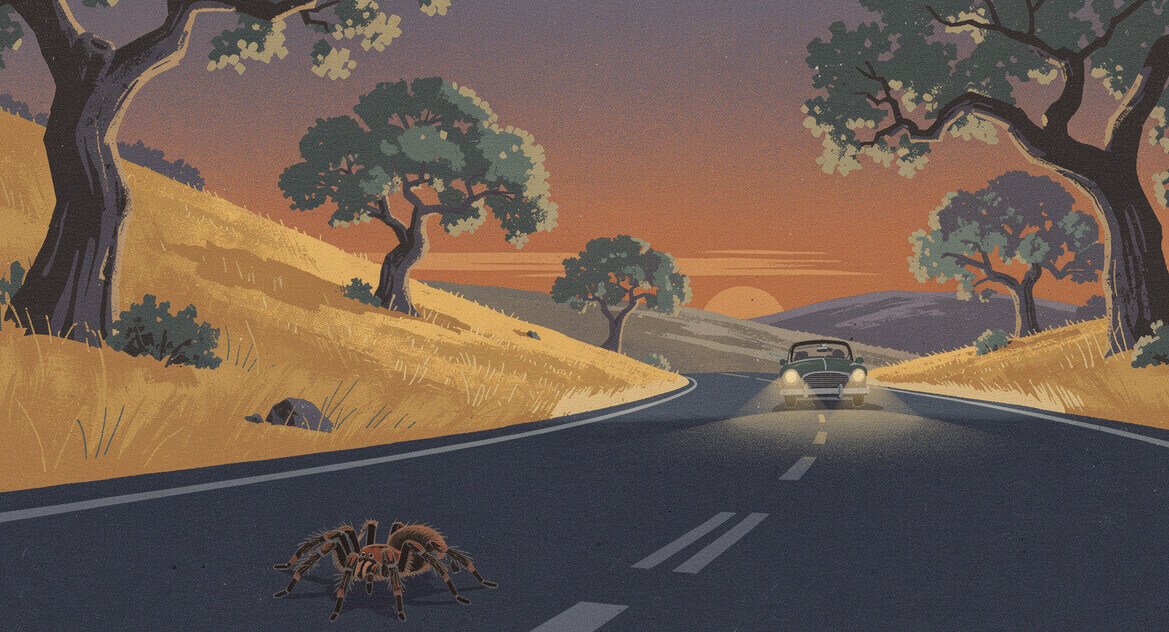
Guided walks are the easy mode. If you want to find one yourself, you’re stacking the odds, not following a map. Here’s how to stack them.
Go in the next two weeks
Every source agrees on September and October, and several put the peak around mid-October. That makes Oct. 5 to Oct. 18 the sweet spot this year. After Halloween, the males thin out fast.
Go late in the day
Bay Nature says the males move most at dusk and dawn, and Visit Tri-Valley says activity picks up as the afternoon cools. Midday heat keeps them down. Inside parks with sunset gates, like Diablo, that means the last hour or two before closing, then out on time.
Look at the ground ahead, not the hills
You’re scanning for a dark, slow, palm-sized shape on pale ground: trail tread, dirt shoulders, pavement edges. Walk slowly. Most sightings are someone who looked down at the right moment. Fire roads and wide trails through open grassland beat shady creek trails.
Warm, dry days after a cool morning are good
The season starts as the weather cools off from summer. A mild fall afternoon is better than a scorcher, and wind and rain keep things quiet.
Dress for the hills
Diablo in October can be hot at 4pm and cold at 6:45 on a walk. Bring water, a layer, and closed-toe shoes for the foxtails. Our California Republic Bear Flag Revolt Vintage T-Shirt is the base layer we’d pick for it: the grizzly on the flag has been gone from these hills for a long time, and the tarantulas never left, which feels like a good thing to wear while you look for one.

The Bear Flag tee
The lone star, the grizzly, and the red stripe, in a cracked, sun-faded print. Soft ring-spun cotton that handles a hot 4pm and a cool 6:45 on the same Diablo walk.
Tarantula etiquette: look, don’t touch
The rules here are simple, and in a state park they’re actual rules, not just manners.
- Don’t touch, don’t pick up. California’s state park regulations (14 CCR § 4305) say no one may “molest, hunt, disturb, harm, feed, touch, tease, or spotlight” any animal. That includes the one on the trail. It also protects you from a face full of itchy abdomen hairs.
- Don’t take one home. Collecting anything in Mount Diablo State Park is prohibited, and the Open Space Authority points out that pulling wild tarantulas off the land to keep as pets can hurt local populations. Every male you see is on the only trip he’ll ever take.
- Give it room. Crouch a few feet back, let it cross, and take your photo from there. Skip the flash. California State Parks asks people to observe without disturbing and to avoid flash photography.
- Don’t poke the burrows. A silk-covered hole in the ground is a female’s home of up to 25 years. Leave the curtain alone.
- Drive like there are spiders in the road. Because there are. Slow down on park roads in the late afternoon, especially on the way out.
- Leash the dog. A curious nose plus urticating hairs is a miserable combination for everybody.
- Log it. California State Parks suggests reporting sightings on iNaturalist, where projects already track Mount Diablo tarantula observations. Your blurry phone photo is data.
The best thing about this whole season is that it costs the spider nothing to be seen. Keep it that way.
Mount Diablo tarantulas FAQ
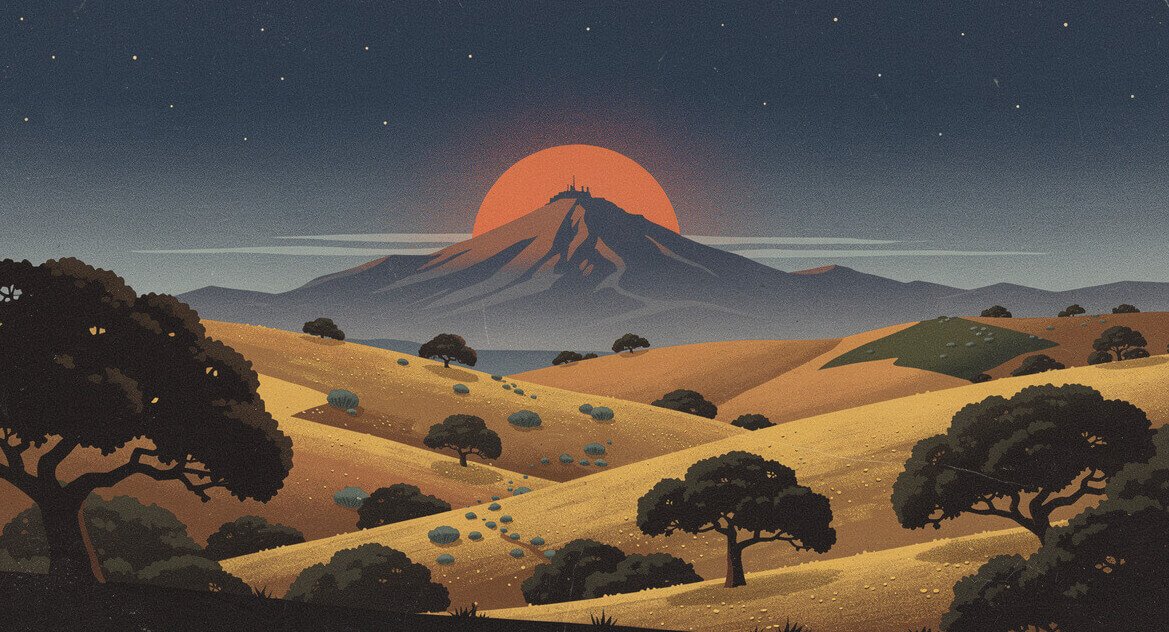
When is tarantula season on Mount Diablo?
The Mount Diablo Interpretive Association puts it at mid-August through late October. September and October are the prime months, with a peak that usually lands in early to mid-October.
What time of day are Mount Diablo tarantulas most active?
Late afternoon into dusk, and again around dawn. Mount Diablo’s gates close at sunset, so on your own, aim for the last hour or two of daylight. For dusk, book a guided walk.
Where on Mount Diablo do people see tarantulas?
Mitchell Canyon, on the north side above Clayton, is the hub for guided tarantula walks. On your own, scan trails through open grassland and the park road shoulders and pullouts late in the day.
Are there tarantula hikes in October 2026?
Yes. MDIA’s “How I Learned to Love Tarantulas” walk runs Oct. 10 and Oct. 11, 4:30 to 6:45 PM, from the Mitchell Canyon Visitor Center (reservations required). Coe’s Tarantula Fest is Oct. 10. The East Bay Regional Park District has Scorpions and Tarantulas at Del Valle on Oct. 9, and Tarantula Treks at Sunol on Oct. 11 and Oct. 25 (registration required).
Is a tarantula bite dangerous?
Not for people. California State Parks compares a bite to less than a bee sting, and they rarely bite. The barbed abdomen hairs are the more likely annoyance, which is one more reason not to handle them.
Why are all the tarantulas I see males?
Because the females stay in their burrows. The wanderers are mature males on a one-time search for a mate, and they don’t survive the winter.
Is it a “tarantula migration”?
That’s what it gets called, and it’s the phrase people search, but it isn’t a migration. There’s no group, no direction, and no return trip. It’s lots of individual males walking the hills at the same time of year.
If you only do one thing
Book the MDIA walk out of Mitchell Canyon on Oct. 10 or 11. It puts you in the right place at the right hour with people who know exactly what they’re looking for, and it keeps you on the right side of the sunset gate. If it’s full, make the drive to Coe for Tarantula Fest on the 10th, or grab the Oct. 25 Sunol trek as your late-season backstop.
And if you miss all of it, the Mount Diablo tarantulas will be back next September, and some of the females that hosted this year’s visitors will still be in the same burrow, a few feet off the trail, waiting it out. The rest of the fall is good too: the aspens are going gold in our Eastern Sierra fall colors ranking, and the Half Moon Bay pumpkin patches are open on the other side of the bay.
Before you go
Get the next ranking in your inbox
We write one of these every day. The best of them, plus whatever California is texting about this week, lands in one short email.


One Comment