The best ghost towns in California, ranked: boom, bust, and which ones you can reach this winter
The best of the ghost towns in California is Bodie, and right now you can’t drive there. The snow closed the road on November 19. That’s the problem with every ghost town list we read before writing this one: they rank the towns like they’re open all year. Some of them include a town in Nevada. Some include places with a post office, a bar, and a few dozen people who would like a word about the “ghost” part.
So this is a different kind of list. Below are the 10 best ghost towns in California, ranked, and each one gets two labels: what kind of ghost town it really is (true ghost, privately restored, rebuilt as an attraction, or a living town with a ghost-town past) and whether to go this winter. Then the story behind them, because every one of these places was, for a few loud years, the most important address in the state.
The best ghost towns in California, ranked

Here’s the short version. The ghost towns in California come from three booms: the Gold Rush in the foothills after 1848, the silver and gold strikes in the Eastern Sierra and the Inyo Mountains in the 1860s and 1870s, and the desert camps that came after, through the 1880s and 1890s, around Barstow and the Panamint Valley. Most of the good ones are a long drive from anywhere, which is exactly why they’re still standing.
- Bodie (Mono County). True ghost, preserved by State Parks. Winter: road closed by snow, skis or snowshoes only. Summer: go.
- Cerro Gordo (Inyo Mountains, above Keeler). Privately owned and being restored. Winter: maybe, check the road first. Spring and fall: go.
- Calico (outside Barstow). Rebuilt as an attraction, now a county regional park. Winter: go.
- Malakoff Diggins and North Bloomfield (Nevada County). Preserved town inside a state historic park. Winter: go, on a weekend.
- Ballarat (Panamint Valley). True ghost, privately owned ruins. Winter: go, after checking the roads.
- Randsburg (Kern County). Living town, population about 45. Winter: go.
- Shasta (west of Redding). Brick ruins plus a museum in a state historic park. Winter: go, Thursday to Sunday.
- Darwin (Inyo County). Living town, population about 36. Winter: go.
- Keeler (Owens Lake). Living town, population about 71. Winter: go, pair it with Cerro Gordo.
- Amboy (Route 66). Privately owned crossroads town. Winter: go.
Why Bodie beats Cerro Gordo: scale and honesty. Bodie has more than 100 buildings standing in what State Parks calls “arrested decay,” which means nobody restores them and nobody lets them fall down. Cerro Gordo is smaller, higher, and more personal, and its owners are rebuilding it, which is great to watch but makes it a different thing. Why Cerro Gordo beats Calico: Calico is fun, but it’s a rebuilt town with a gift shop on every corner. Cerro Gordo still feels like a mining camp. Why Calico still makes #3: it’s the one on this list you can take your grandmother to on Thanksgiving weekend.
Left off on purpose: Rhyolite, which shows up on a lot of California lists and is in Nevada. Jamestown, Johannesburg, and other towns where people still go to work in the morning, unless we say so and label them. If you want the towns where the Gold Rush is still a living Main Street, that’s our ranking of the best small towns in Gold Country.
Bodie: the best ghost town in California (and why you can’t drive there this month)
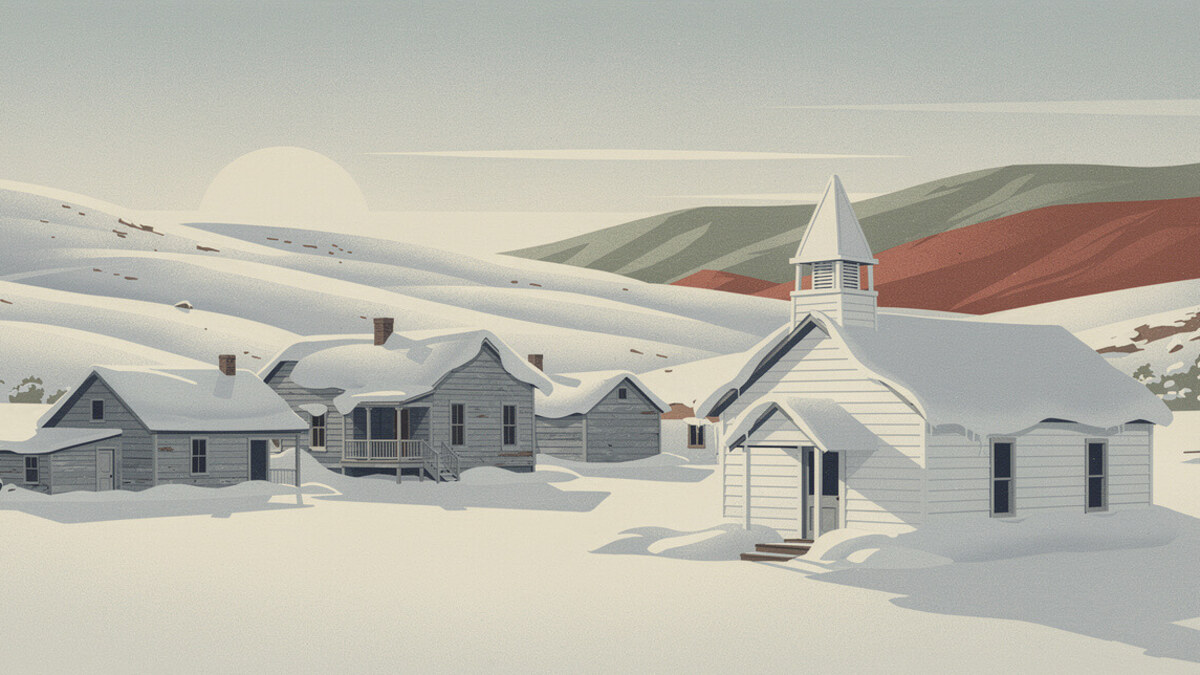
Bodie sits high in the bare hills east of the Sierra, north of Mono Lake, and it’s the real thing. The town is named for Waterman S. Body (also spelled Bodey), who found gold here in 1859. It sat quiet for years. Then a mine discovery in 1875 and the Standard Company’s purchase in 1877 turned it into a boomtown, and by its peak State Parks puts the population at nearly 10,000. That’s a lot of people at a cold, windy altitude with no trees to burn.
Bodie became a state historic park in 1962, and in 2002 the Legislature named it California’s official Gold Rush ghost town. Fires in 1892 and 1932 burned parts of the town. What’s left is still more than any other ghost town in the state: more than 100 buildings, including houses, a church, and stores, with the interiors left as they were, still stocked. You walk the streets and look through the windows at desks, beds, and shelves of cans that haven’t moved in decades.
The winter problem
The road into Bodie is State Route 270 off US 395, and the last 3 miles are unpaved. State Parks lists it as closed as of November 19, 2026, and that’s normal: snow usually closes it from around November into late spring. The park itself stays open (winter hours are 9 to 4), but the only ways in are skis, snowshoes, or a snowmobile. The museum and gift shop hours in winter depend on weather and staffing. The park’s own alert says plenty of four-wheel-drive vehicles with chains get stuck every year and tells you not to trust your GPS. Take it at its word.
For most people, that means Bodie is a May-to-October trip. The best time is a weekday in late May or June, when the road is open, the light is good, and the summer crowd hasn’t hit yet. Pair it with the drive in our Eastern Sierra fall colors ranking in early October, or with a soak from our list of the best hot springs in the Eastern Sierra. Adult entry is $8 according to the park.
The curse
You’ll hear that anything taken from Bodie brings bad luck. The story goes around enough that letters arrive with returned nails, bottles, and bits of glass, about one a week according to a park interpreter who spoke to KQED. That interpreter also said the curse began as a story staff told to stop people taking things. It’s folklore. The rule underneath it is real: removing anything from a state park is illegal. Leave it where it is.
The Inyo silver towns: Cerro Gordo, Darwin, and Keeler
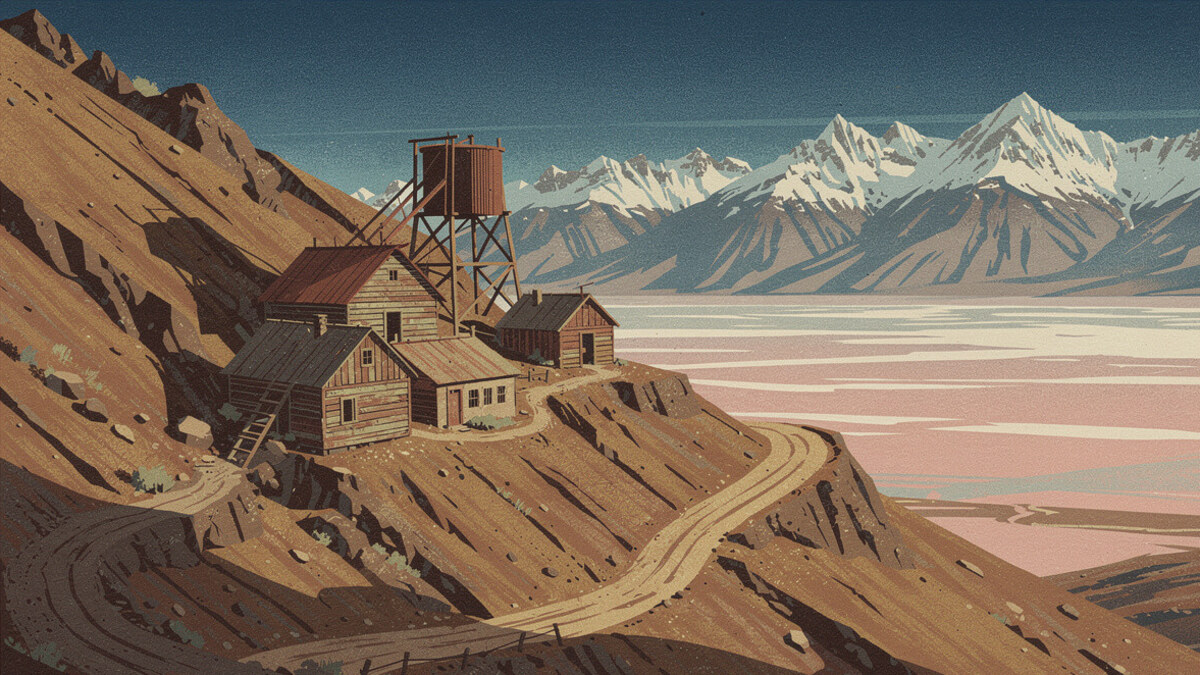
Bodie was gold. The towns on the east side of the Owens Valley were silver, and their story ends in Los Angeles. In the 1870s, silver-lead bullion from Cerro Gordo came down the mountain to Owens Lake, crossed the lake on a steamer called the Bessie Brady, launched July 4, 1872, and then rode mule teams south to LA. Owens Lake is mostly a dry, pink-and-white flat now, and from Cerro Gordo you look straight down on it.
2. Cerro Gordo
Silver was found here in 1865. Mortimer Belshaw arrived in 1868, built a smelter, and built the first wagon road up the mountain. The town has been privately owned since 2018, and its owners have spent years restoring it, including rebuilding the 1871 American Hotel after it burned in June 2020. Treat the rebuild as something to look at, not somewhere to stay: we couldn’t confirm that the hotel is taking guests.
The official site says Cerro Gordo is open every day from 9 to 5, no appointment needed. The catch is the road. It climbs about 5,000 feet in 8 miles on dirt, four-wheel drive is recommended, and it washes out and gets rockslides. From November to April it can be under snow, so on any winter day, check the official site before you leave Lone Pine. Spring and fall are the sweet spot. It ranks below Bodie only because it’s smaller and restored, and above Calico because it’s still a camp, not a set.
8. Darwin
Darwin started in 1874 after a silver-lead strike, and it had more than 1,000 people at its peak. The 1937 road to Death Valley bypassed it, and the 2020 census counted 36 people. It still has a post office, which is why we call it living. Bring what you need, because you shouldn’t count on buying anything. If you’re coming from the Death Valley side, check the Park Service’s road conditions page first: the road to Darwin Falls is washed out and is expected to stay closed until summer 2027. Our best hikes in Death Valley has the hikes that are open this winter.
9. Keeler
Keeler is on the east shore of Owens Lake, at the bottom of the Cerro Gordo road. It was laid out in 1880 and named for Julius M. Keeler. The Carson and Colorado Railroad reached it in 1883, and trains ran until 1960. About 71 people live there now. It ranks low as a destination and high as a stop: look at the old depot-era town on your way up to Cerro Gordo, then look back at it from the top.
The desert ghost towns for winter: Calico, Ballarat, Randsburg, and Amboy
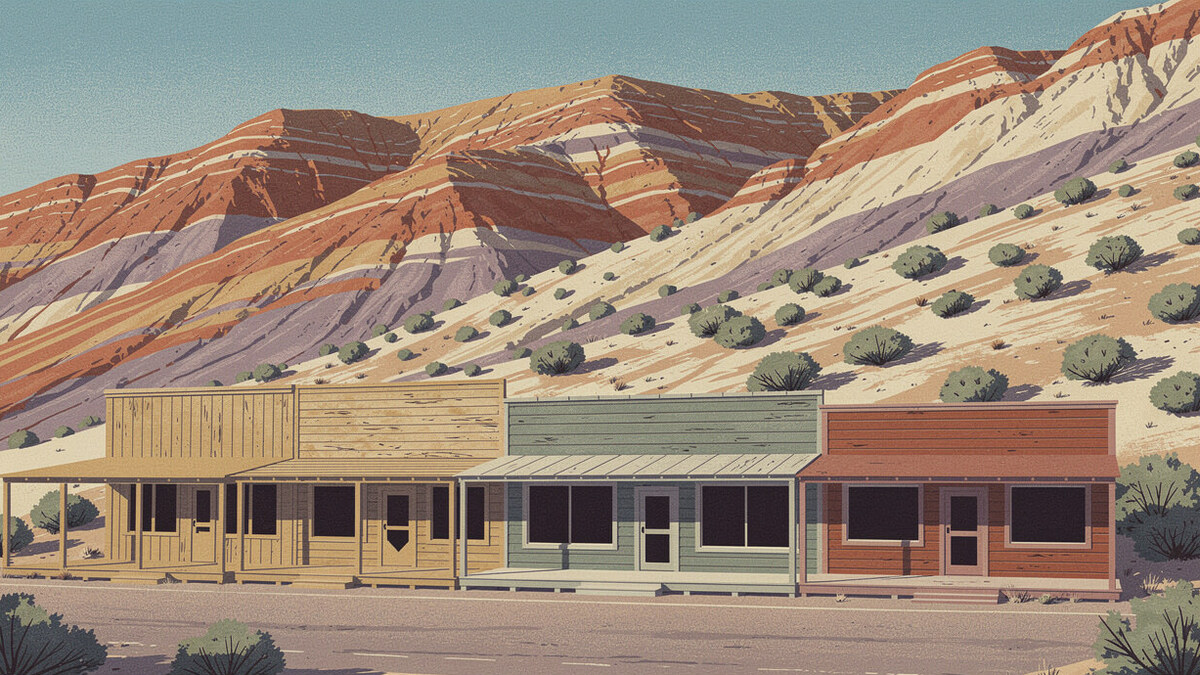
When the Sierra towns close for snow, the desert opens. November to April is the season for these towns, when the days are in the 60s instead of the 110s and the light goes gold by 3pm. They’re also the ghost towns in California closest to Los Angeles, which is why they fill up on holiday weekends.
3. Calico
The silver strike came in 1881, and the mines here produced about $20 million in silver plus $9 million in borate. When the silver price collapsed in the 1890s, the town emptied. Walter Knott, of the berry farm, bought it in the early 1950s (the county dates it to 1951) and restored it, then donated it to San Bernardino County in 1966. It’s been a regional park ever since, and in 2005 it was named California’s official Silver Rush ghost town.
Calico is the rebuilt kind, and it doesn’t pretend otherwise. There are shops, a mine tour, a small train, and food, with attractions priced separately. The county lists it as open daily 9 to 5, closed Christmas Day, with entry at $8 for adults and $5 for kids 4 to 11. This Saturday, November 28, it has its Holiday Fest with a tree lighting. Go for the hills behind the town, which are striped red, ochre, purple, and cream, and stay for sunset. If you want quiet, go on a weekday morning.
Calico is just outside Barstow, off I-15 near Yermo. Barstow is the town on our Vintage Route 66 Shirt (Barstow Mojave Desert), and the same Route 66 country we drove in Route 66 in California at 100.
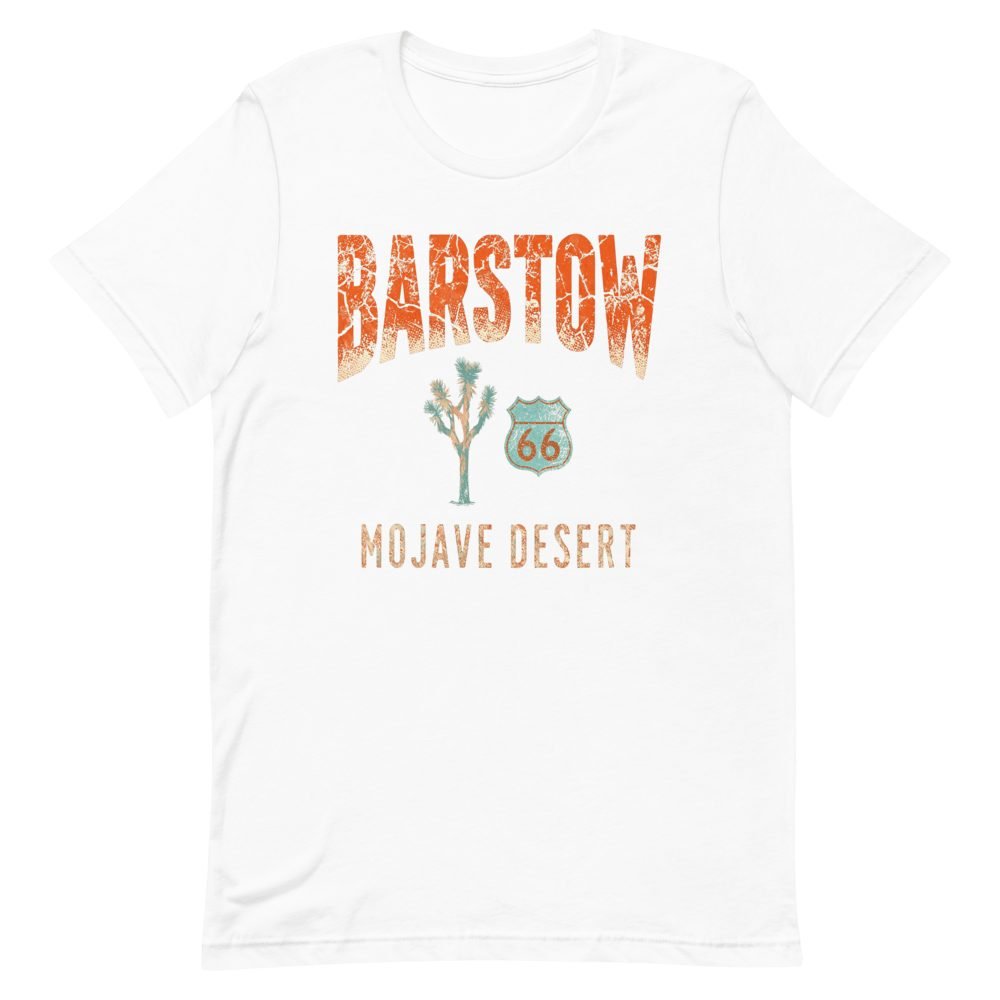
Barstow, the last stop before Calico
Our Vintage Route 66 Shirt puts BARSTOW in big cracked western slab letters over a Joshua tree and a Route 66 shield, printed on soft ring-spun cotton. It’s the town you pass through on the way to the silver hills.
5. Ballarat
Ballarat is the opposite of Calico. It started in 1897 as the supply town for mines in the Panamint Range, and by 1898 about 400 people lived here. The big producer, the Ratcliff mine up Pleasant Canyon, shipped about 15,000 tons of gold ore between 1898 and 1903, and when it played out, so did the town. Now it’s a few melting adobe walls, some wooden shacks, and a lot of sky, at the edge of the Panamint Valley on the west side of Death Valley National Park.
The Park Service notes the ruins are privately owned, and visitors are welcome. For years one longtime resident ran a small store; nearby residents run it now, and we couldn’t confirm when it’s open, so arrive with full water and a full tank. Storms on October 22 and November 1 damaged roads across the Death Valley area, so check the Park Service’s conditions page before you go. A higher-clearance car makes the dirt approach easier. It ranks above Randsburg because it’s a true ghost town, and below Malakoff because there’s less to see.
6. Randsburg
Gold turned up at the Yellow Aster mine on April 25, 1895. By the end of 1896, more than 1,500 people lived here. Randsburg is a living ghost town: 45 people at the last census, a short main street of old false-front buildings, and a crowd of off-roaders on cool holiday weekends. One thing older guides get wrong: the Randsburg General Store closed in 2022. The small desert museum has kept weekend hours, so check ahead. Go on a weekday if you want it to feel like a ghost town and not an OHV staging area.
10. Amboy
Amboy is barely a town and completely private: one family owns it. Roy’s opened in 1938, and its tall roadside sign is a Route 66 landmark. Albert Okura bought the whole town in 2005, and his family runs it now. As of this year, the gas station and gift shop are open, and the cafe and motel rooms are still being brought back, with a goal of reopening rooms by the end of 2026. It ranks last because there’s one block of it, but it’s the right stop between Barstow and Needles.
The Buzz, weekly
Know what's buzzing before everyone else does
One email a week: what's blooming, what's opening, what's worth the drive, and new designs from the shop. No spam. Unsubscribe anytime.
Gold Country ghost towns: Malakoff Diggins, Shasta, and the honest truth about Coloma
Here’s the thing about Gold Country: most of its towns didn’t die. Grass Valley, Nevada City, Sonora, Placerville, and the rest made it through the bust, and they’re why the foothills feel lived in. The true ghost towns in California’s foothills are the ones that bet on one method or one strike and lost. Two of them are worth a winter drive.
4. Malakoff Diggins and North Bloomfield
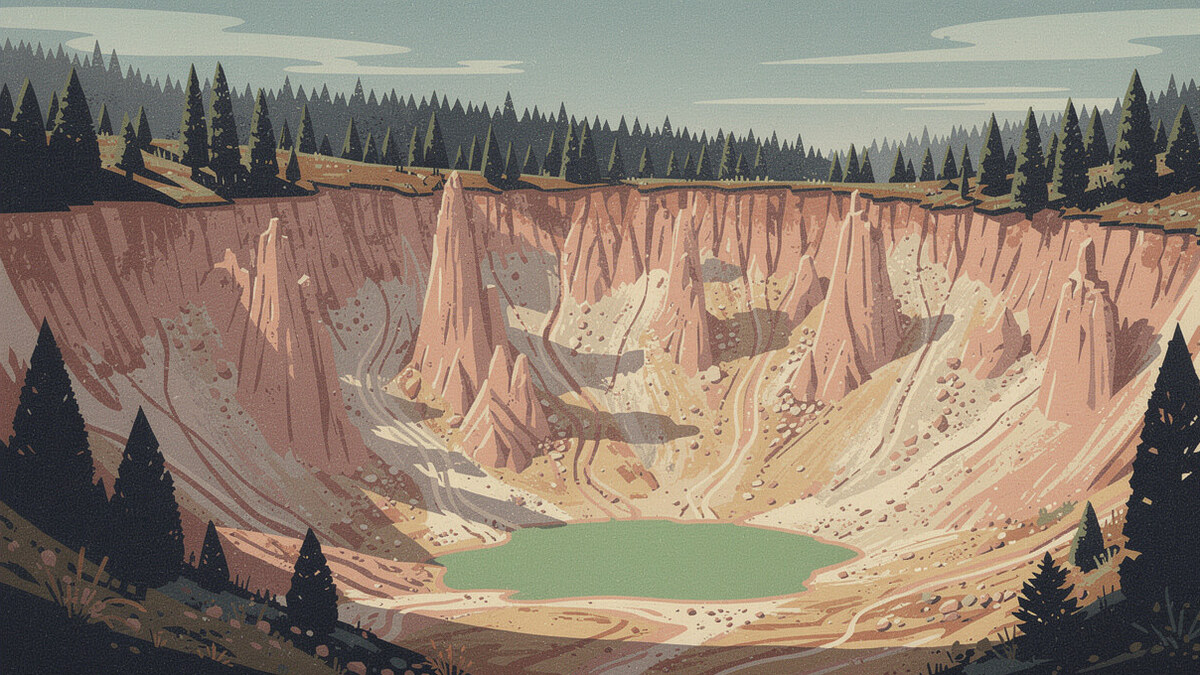
State Parks calls Malakoff Diggins California’s largest hydraulic gold mine. Until 1884, crews aimed huge water cannons at the hillside and washed it into the rivers. What’s left is a pit roughly 7,000 feet long and close to 600 feet deep in places, with pink and cream cliffs and spires that look like a small Bryce Canyon in the pines. The debris went downstream, fouled rivers and farmland in the valley, and led to a lawsuit by a farmer named Edward Woodruff. On January 7, 1884, Judge Lorenzo Sawyer of the federal circuit court ruled for him. The Sawyer Decision banned dumping mining debris into the rivers, effectively ended large-scale hydraulic mining, and is often called one of the first environmental rulings in the country.
North Bloomfield, the mining town on the rim, is preserved inside the park, with its old buildings standing along the main road. The park is open daily, sunrise to sunset. From November to May, the visitor center and museum are open only on weekends, 10 to 4, so go on a Saturday. The park warns against trusting GPS, which can put you on unpaved roads, and says North Bloomfield Road and Relief Hill Road aren’t recommended. Take the all-paved route from Highway 49: Tyler Foote Road, Curzon Grade, Back Bone, then Derbec. The Humbug Trail is closed for now after part of it failed. It ranks #4 because it’s the only place on this list where you can see what mining did to the land as clearly as what it built.
7. Shasta
Before Redding was the big town, there was Shasta, the “Queen City” of the northern mines. What’s left is a row of roofless brick buildings along Highway 299, about 6 miles west of Redding, some with their iron shutters still on the hinges, plus a courthouse restored to how it looked in 1861 that now holds a museum. The museum is open Thursday to Sunday, 10 to 4. It ranks below North Bloomfield because it’s smaller, but the brick ruins make one of the best short stops in the north state.
The honest truth about Coloma (and Columbia)
James Marshall found gold at Sutter’s sawmill on the South Fork of the American River in January 1848, and that started everything else in this post. Coloma, where it happened, is now Marshall Gold Discovery State Historic Park. About 200 people live there year-round, so it’s not a ghost town, whatever the lists say. Same goes for Columbia, a restored Gold Rush town with working shops, free to walk. Both are worth the drive, but both are closed on Thanksgiving and Christmas, so not today.
One more for trivia night: at French Corral, also in Nevada County, the state landmark plaque says the first long-distance telephone line in the world was built here in 1877, running 58 miles to French Lake.
How to visit ghost towns in California without ruining them

The reason these towns are still standing is that most people leave them alone. Here’s how to be one of them.
Take nothing, not even the nail
California’s state park regulations are blunt: “No person shall remove, injure, disfigure, deface, or destroy any object of archaeological, or historical interest or value.” That’s 14 CCR 4308, and it covers the bottle, the square nail, and the scrap of wallpaper. Many parks ban metal detectors outright. On federal land, which covers most of the desert towns, the Bureau of Land Management says the remains of historic cabins, mills, and townsites can’t be collected, and taking artifacts more than 100 years old without a permit is a federal crime. Take photos.
Don’t trust the GPS, and carry everything
Bodie and Malakoff Diggins both warn visitors not to trust GPS, and both mean it. Download offline maps, top off your tank in the last real town (Lone Pine, Bridgeport, Barstow, Trona, or Nevada City), and carry more water than you think you need, even in December. Cell service ends long before the pavement does. If a road is listed as closed or “not recommended,” that’s the whole answer.
Match the town to the season
- November to April: Calico, Ballarat, Randsburg, Amboy, Darwin, Keeler, Shasta, and Malakoff Diggins (weekends for the museum).
- May to October: Bodie, plus the high Eastern Sierra camps, Masonic and Lundy, and Bennettville off the Tioga Road, which closes every winter.
- Spring and fall: Cerro Gordo, when the road is dry and the snow is gone.
Stay out of the holes
Every town on this list sits on top of old mine workings. Shafts can be hidden under boards or brush, and the air inside old tunnels can be bad. Stay on the paths, keep kids and dogs close, and don’t go into any mine opening that isn’t part of a guided tour.
Ghost towns in California: FAQ
What is the best ghost town in California?
Of all the ghost towns in California, Bodie wins by a long way. It has more than 100 original buildings, interiors left as they were, and State Parks keeps it in “arrested decay.” Just plan it for May to October, because the road usually closes for snow in November. In winter, the best ghost town in California you can drive to is Cerro Gordo if the road is clear, or Calico if you want an easy day.
Can you visit Bodie in winter?
The park stays open, 9 to 4, but Highway 270 into Bodie has been closed by snow since November 19, 2026. Winter access is by skis, snowshoes, or snowmobile only. Most people should wait for the road to open in late spring.
What’s the closest ghost town to Los Angeles?
Of the towns on this list, Randsburg and Calico are the easiest drives from LA, roughly two to three hours from downtown depending on traffic. We’re writing a separate guide to ghost towns near Los Angeles.
Is Calico a real ghost town?
It was. Calico was a real silver town in the 1880s and emptied in the 1890s. What you see now was restored in the 1950s and is run as a county park with shops and attractions. That’s why it’s #3 here, not #1.
Can you stay overnight in a ghost town?
Not at Bodie. Malakoff Diggins has a campground and cabins by reservation, but we couldn’t confirm winter availability. The American Hotel at Cerro Gordo has been rebuilt since the 2020 fire, but we couldn’t confirm it’s taking guests. Amboy’s motel rooms are still being restored. For now, the easy answer is to sleep in the nearest real town.
If you only see one?
This winter, make it Cerro Gordo on a clear, dry day, with Keeler on the way up. The view of Owens Lake and the Sierra from the top is one of the best in the state, and it feels like what it is: a mining camp that a few people decided not to let die. Then put Bodie on the calendar for June.
Before you go
Get the next ranking in your inbox
We write one of these every day. The best of them, plus whatever California is texting about this week, lands in one short email.