
The 5 best hot springs in the Eastern Sierra, ranked
Highway 395 runs the spine of the Eastern Sierra for close to 300 miles, and at a dozen spots along it, hot water is coming straight up out of the ground, for free, no reservation required. The best hot springs in the Eastern Sierra aren’t a secret exactly, but they’re not marked with a sign either. You find them by knowing the dirt road, or by knowing someone who does. This is that list: five real soaks between Bridgeport and Bishop, ranked by the thing that actually matters when you’re standing in a parking lot at 6,900 feet wondering if it was worth the drive.
Number one is Travertine Hot Springs, and it isn’t close. Here’s why, and here’s what beats it for a different kind of trip.
1. Travertine Hot Springs, Bridgeport
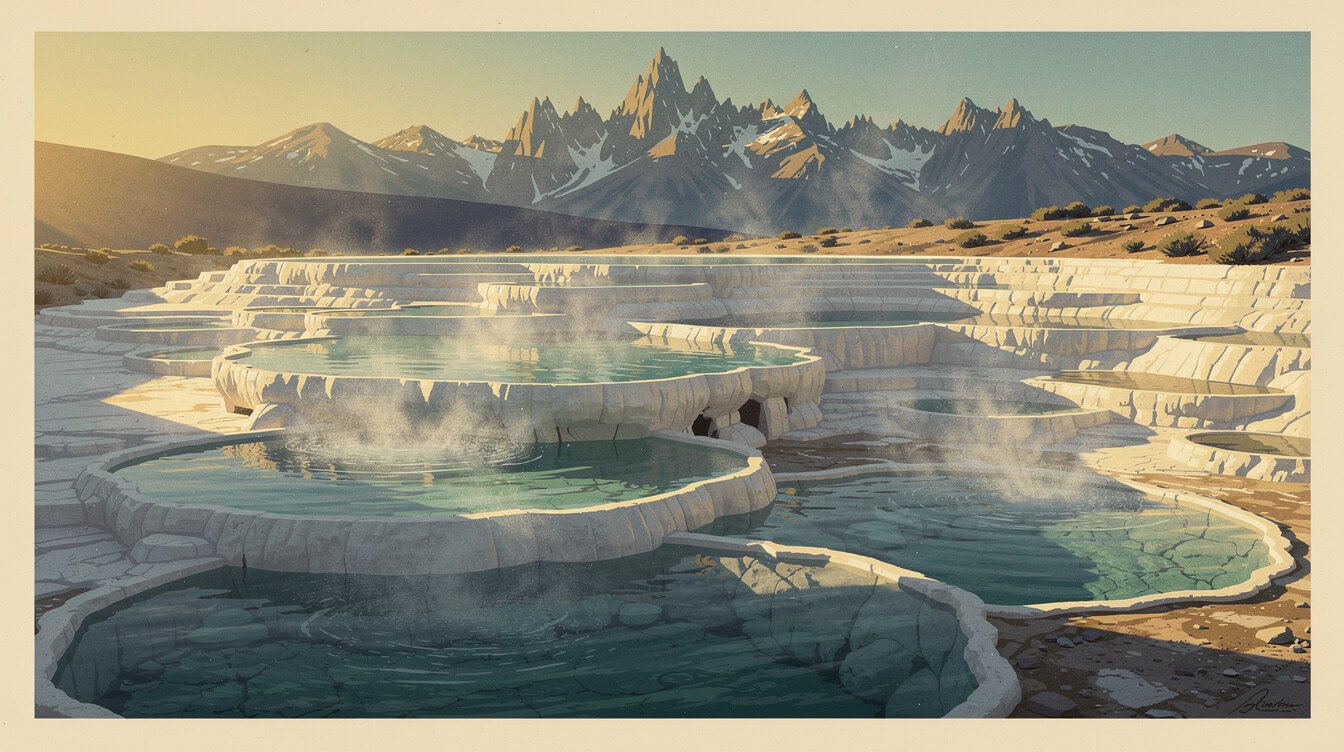
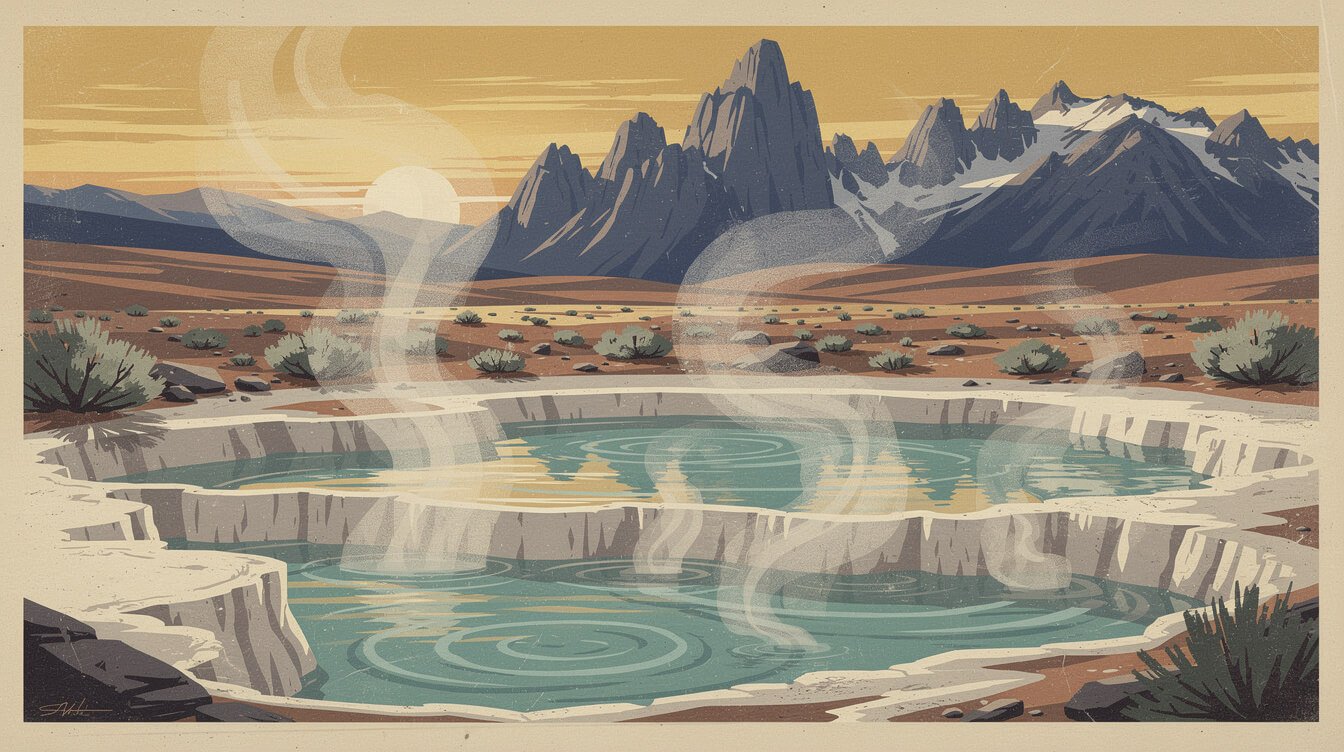
Travertine wins because it makes you work the least for the most. From town, go south on the 395 about a mile, turn onto Jack Sawyer Road just before the ranger station, stay left at the fork, and 1.1 miles of rutted dirt later you’re parked. Five minutes of walking gets you to a set of white mineral terraces stacked with pools, each one a slightly different shade of blue-green, each one a slightly different temperature. Pick the one that suits you and climb in.
The view is the other half of the case: the Sawtooth Ridge and the Sierra crest fill the whole western sky, and at sunset the white travertine goes gold before the light drops behind the peaks. Get there an hour before sunset and you’ll have time to pool-hop before the color show starts — the terraces sit at different heights, so the water cools slightly as it works downhill, which means you can chase whichever temperature suits you without leaving the parking area far behind.
There’s a drop toilet at the lot, no fee, no permit, and the land is managed jointly by the BLM and California State Parks. The road turns to soup after rain or snow, so check the forecast before you commit the sedan. Camping at the springs or in the lot isn’t allowed, and rangers actually enforce it, so plan to soak and go — Bridgeport itself, ten minutes north, has motels and a diner if you want to make a night of the area without pitching a tent at the pools.
2. Buckeye Hot Springs, Bridgeport
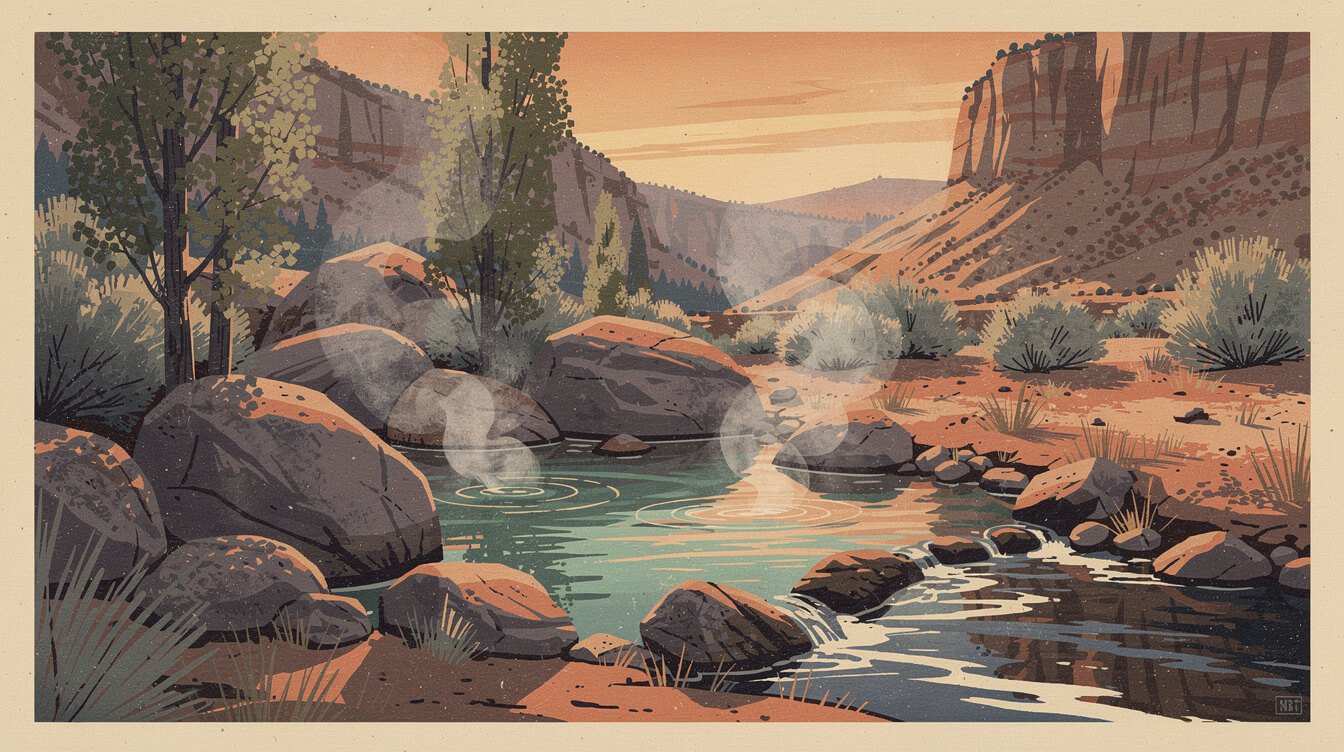
Buckeye drops to second for one reason: it asks more of you than Travertine does, which is also its whole appeal. Take Twin Lakes Road seven miles out of Bridgeport, turn onto Buckeye Road, and follow the dirt about two to three miles to the parking area — or cut in earlier off the 395 onto Buckeye Road itself, three to four miles north of town, if you’d rather skip the paved detour. The upper pools sit close to the parking area with barely a walk. The good ones, the pools right where the hot water meets Buckeye Creek, mean a steep 150-to-300-foot scramble down a rocky trail, coordinates roughly 38°14’N, 119°19’W if you want them loaded before you lose signal.
That creek is the whole trick. You can sit in water hot enough to turn you pink, then lean over and dunk an arm in snowmelt running straight off the Sierra crest. Cottonwoods shade the canyon in a way Travertine’s open flat doesn’t offer, which matters in July, and the walls of the canyon block enough wind to make an October soak comfortable even after dark. In winter the access road stops getting plowed, so you’re hiking in on snow even though the springs themselves never close. Four-wheel drive isn’t required in dry conditions, but higher clearance makes the washboard sections a lot less punishing on a sedan’s undercarriage.
Twin Lakes, right on the way in, is one of the better trout fisheries in the Eastern Sierra if you want to turn the drive into a full day — pack a rod along with the swimsuit.
3. Wild Willy’s Hot Springs, Long Valley
Twenty minutes east of Mammoth Lakes, the ground opens into Long Valley, and Wild Willy’s is the friendliest way into it. This whole basin sits inside the Long Valley Caldera, one of the largest volcanic calderas on the continent, left behind by an eruption roughly 760,000 years ago that also produced the pale Bishop Tuff you’ll see in road cuts on the drive down from Mammoth. All that buried heat is still working — it’s the reason there’s hot water coming up across dozens of spots in this one valley.
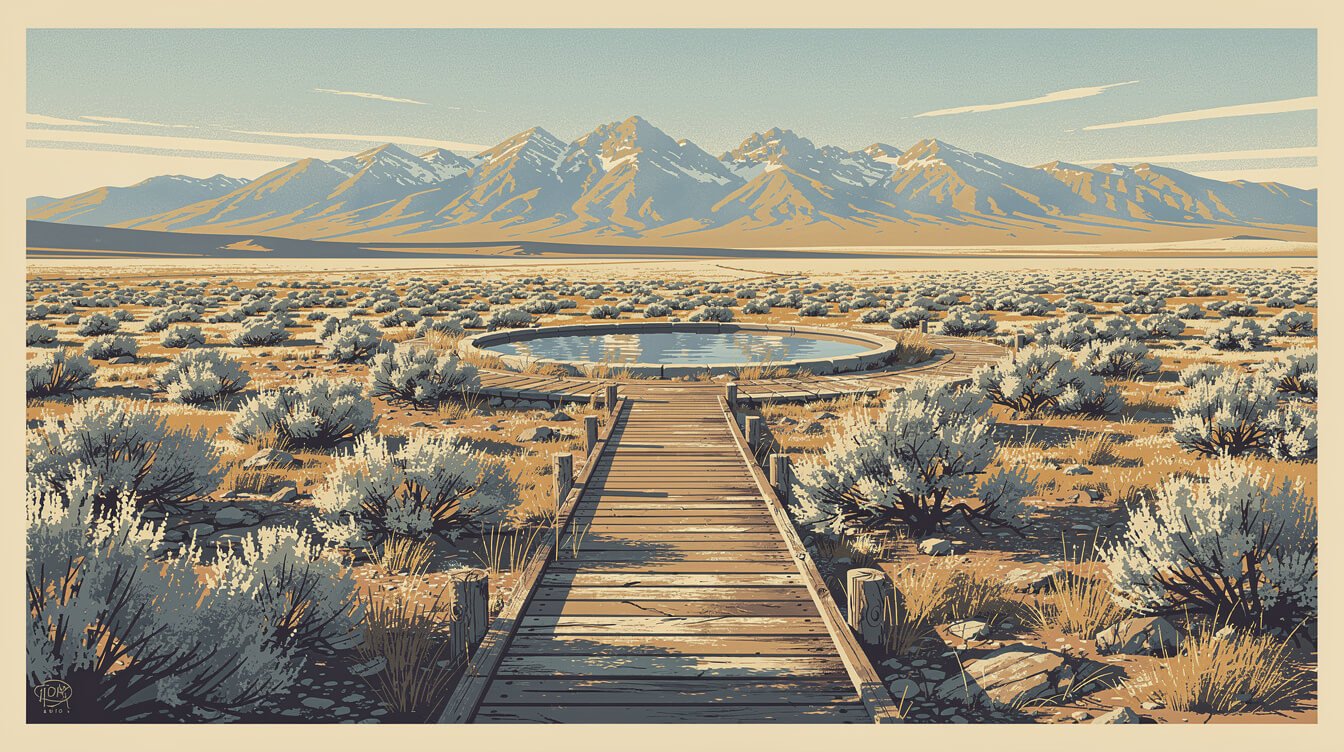
A wooden boardwalk, built and maintained by volunteers over the years, carries you across the sagebrush flat to two pools, including a heart-shaped one that fits ten to fifteen people without anyone touching elbows. The source runs around 105°F and cools to a soaking-friendly 98 to 102°F by the time it fills the pool, depending on the day and how much cold air is moving across the flat.
It drops to third mainly because of company: Wild Willy’s is the best-known soak in Long Valley, which means weekends bring a crowd, and a crowd changes the mood. Go on a weekday morning if you can, or after sunset under a sky with no light pollution for fifty miles. It’s free, the boardwalk means you don’t need to scramble over anything, and it’s the easiest entry point in this whole list if you’ve never done a wild hot spring before.
4. Hilltop Hot Springs, Long Valley
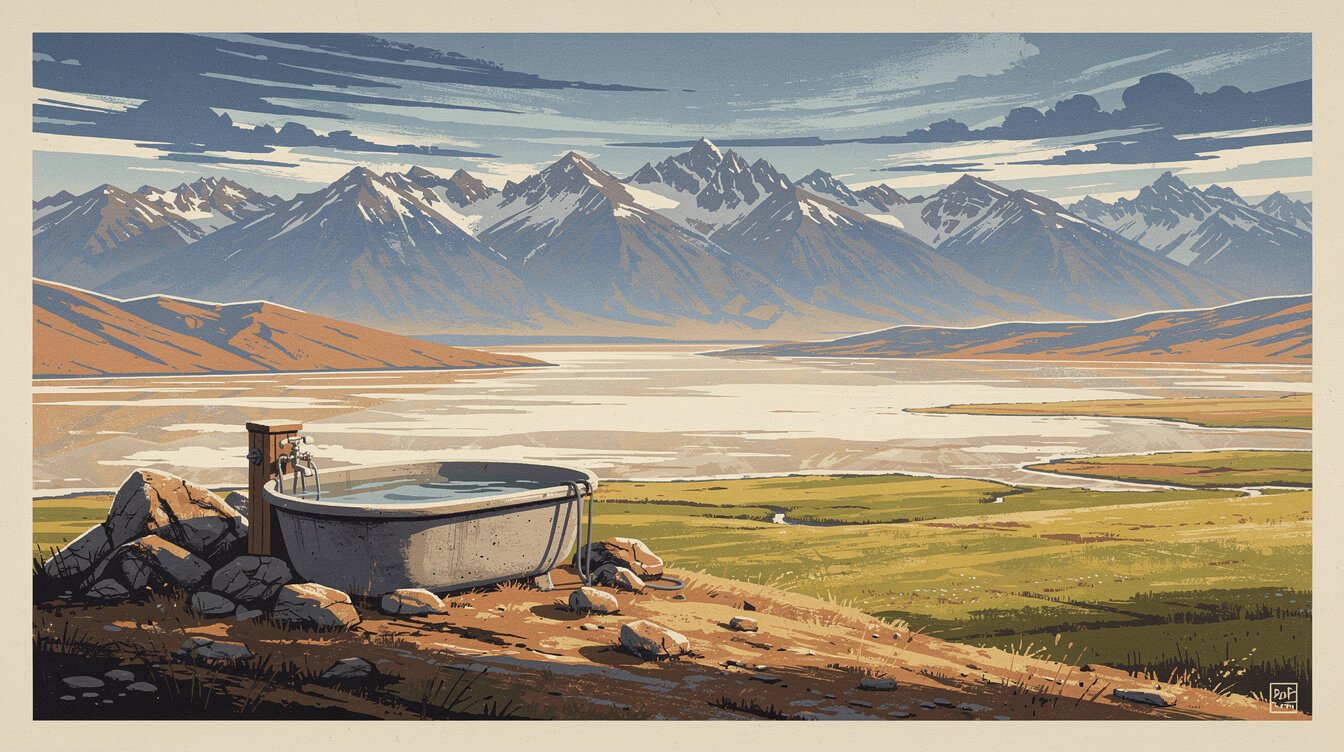
Locals call it Pulkey’s Pool, and it’s a single rock-and-cement tub that holds four to six people, fed by a source running up to 130°F with gate valves so you can dial in your own mix of hot and cold. What it lacks in size it makes up for in the view: a 360-degree sweep of meadow, alkali flat, and the Sierra crest from a low rise in the middle of the caldera. From Mammoth Lakes, take the 395 south, turn onto Benton Crossing Road near the airport, go about 3.5 miles, then look for the unmarked dirt turnoff on the left and a short quarter-mile boardwalk across the flat to the tub.
Fall is the sweet spot here — cool enough to enjoy the hot water at any hour, no mosquitoes off the marsh, and usually a first dusting of snow on the peaks behind you. It’s a one-tub operation, so if someone’s already soaking, you wait or you come back. One piece of etiquette that keeps this place pleasant: whoever arrives finds the valves set wherever the last person left them, so dial the temperature down before you go rather than leaving it scalding for the next soaker.
Pack a headlamp if you’re going for the stars; there’s no light out here besides what you bring, and Long Valley’s night sky is one of the better free shows in the Eastern Sierra. If you want that view on a shirt instead of just in your camera roll, our California Republic Bear Flag tee was made for exactly this kind of drive.
The Buzz, weekly
Know what's buzzing before everyone else does
One email a week: what's blooming, what's opening, what's worth the drive, and new designs from the shop. No spam. Unsubscribe anytime.
5. Keough’s Hot Springs, Bishop
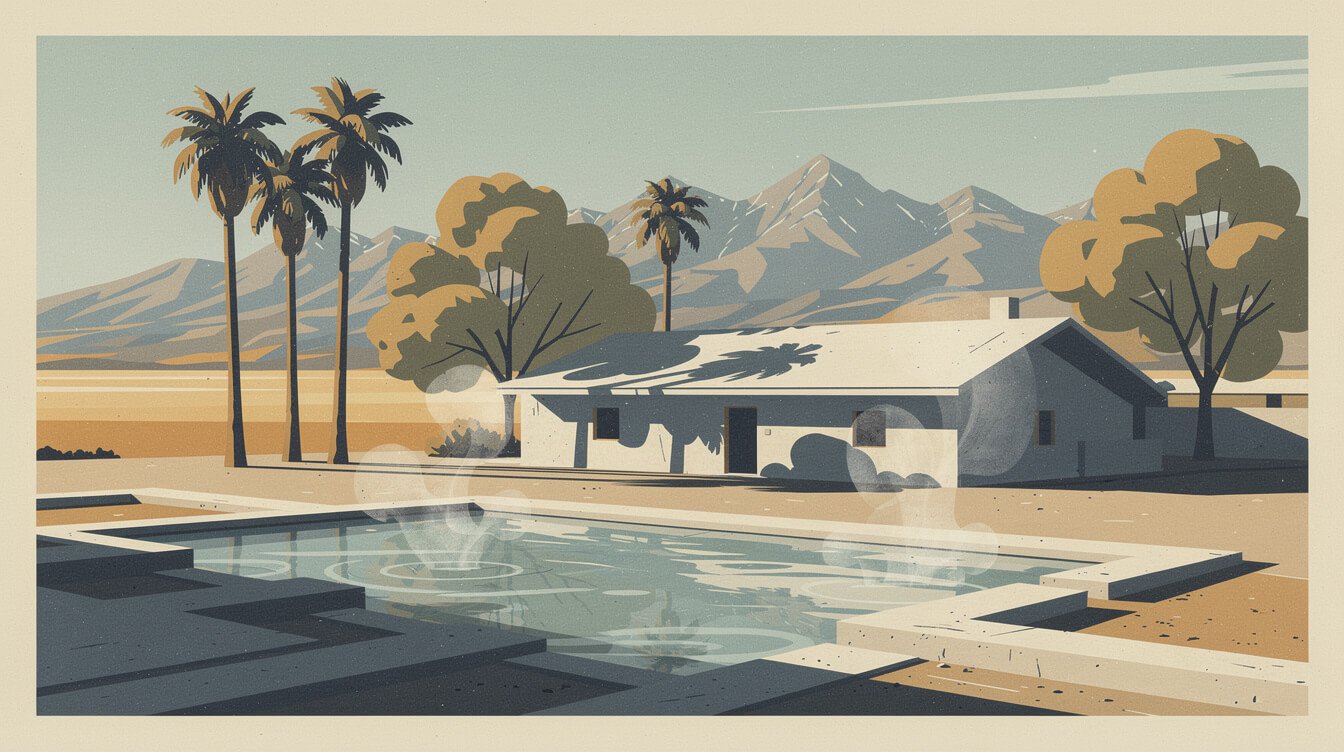
Keough’s is the one developed stop on this list, and it earns its spot for exactly that reason: showers, changing rooms, and a pool you don’t have to hike or scramble to reach, seven miles south of Bishop on the 395. It’s been drawing soakers to the Owens Valley since 1919, and the setup hasn’t needed to change much — a large pool kept in the high 80s to low 90s and a smaller, hotter soaking pool alongside it, both fed continuously by geothermal water pulled from the ground carrying more than two dozen dissolved minerals.
There’s a day-use gate fee, so bring cash or a card, and check the current hours before you drive out, since a private operation like this can shift its schedule with the season. It ranks fifth on a list like this one because it’s the least wild of the bunch — there’s no dirt road, no scramble, no chance of having the whole pool to yourself. But it’s the pick for a cold day, a trip with kids, or the afternoon you just don’t have it in you to find a turnoff with no sign.
On-site camping and tent-cabin glamping mean you can make a weekend of the Owens Valley without ever getting back in the car, and Bishop itself, ten minutes north, has more restaurants and gear shops than anywhere else between Mammoth and the 14.
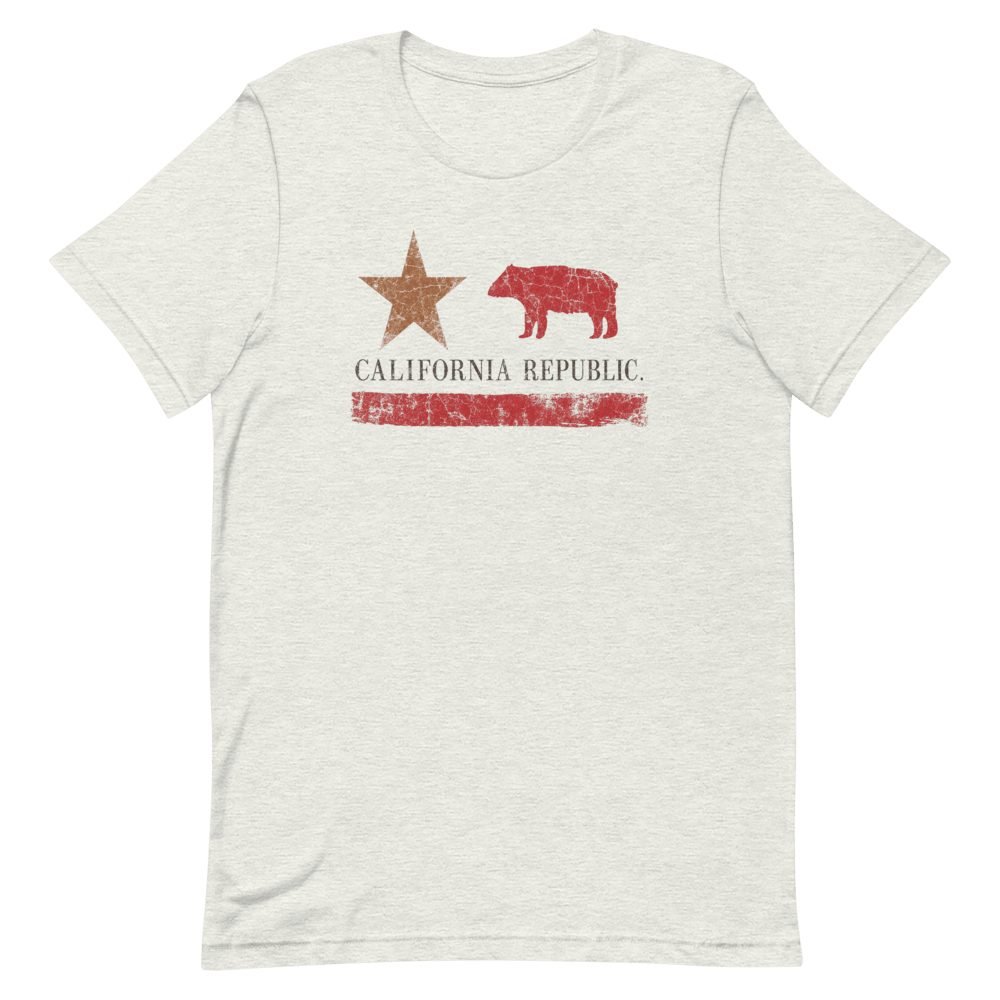
California Republic June 1846 Bear Flag Revolt Vintage T-Shirt
The lone star, the grizzly, the red stripe, worn in bold and weathered like it’s been on the dash of a truck through the Owens Valley for years. A good match for a day spent chasing hot water up and down the 395.
Frequently asked questions
When’s the best time to visit?
Spring and fall. Summer days in Long Valley bring mosquitoes off the marsh and heat that makes a 100°F soak miserable; winter can snow shut the access roads to Buckeye and Travertine. Late September through November is close to ideal: cool air, clear skies, and usually still passable dirt roads.
Is nudity common?
At the undeveloped springs — Travertine, Buckeye, Wild Willy’s, Hilltop — yes, sometimes, though it’s not universal and nobody’s required to. Bring a suit if you’d rather not decide on the spot, and be respectful either way; these are shared, unpatrolled pools.
Are dogs allowed?
Generally yes at the BLM and national forest sites, on leash and out of the water. Keough’s, as a private pool, doesn’t allow pets in the pool area.
What should I bring?
Water shoes for the rocky approaches, a headlamp if you’re staying past dark, layers for the desert temperature swing between afternoon and night, and a trash bag — pack out what you bring in. Cell service is spotty to nonexistent at Buckeye, Wild Willy’s, and Hilltop, so download directions before you leave the 395.
Can I camp at the springs?
Not at Travertine — it’s posted and enforced. Dispersed camping is allowed in parts of the surrounding national forest and BLM land under the usual rules, so check current restrictions for the specific area before you set up, and never camp in a spring’s parking lot even where it looks tolerated.
Can I visit more than one in a day?
Easily, if you plan the geography. Travertine and Buckeye sit minutes apart outside Bridgeport, and Wild Willy’s and Hilltop are both inside Long Valley, about a 45-minute drive south of Bridgeport. Pairing one from each cluster in a single day along the 395 is the natural way to do this trip.
Final thoughts
If you only do one, make it Travertine — the easiest drive for the biggest payoff, and a view worth the trip on its own even before you get in the water. But the real move is stacking two in a day: Travertine or Buckeye in the morning near Bridgeport, then south to Long Valley for Wild Willy’s or Hilltop at sunset, with Keough’s in your back pocket if the weather turns. That’s most of what makes the Eastern Sierra worth the drive up the 395 in the first place.
Heading down to the coast after your soak? Our ranking of the best fish tacos in San Diego is a good excuse for the rest of the trip.
Before you go
Get the next ranking in your inbox
We write one of these every day. The best of them, plus whatever California is texting about this week, lands in one short email.

2 Comments