
The 7 best small towns in Gold Country, ranked
Highway 49 is numbered for the forty-niners, and it strings together the old mining camps of the Sierra foothills like beads on a wire. Some of those camps turned into real towns. Some turned into parking lots with a plaque. The best small towns in Gold Country are the ones that are still lived in: brick storefronts with iron shutters, sure, but also a good bar, a working theater, and somewhere to get breakfast on a Sunday. Number one is Nevada City, and it earns it by being a town first and a history lesson second.
This is a ranking of seven, from Nevada City in the north down to Jamestown in the south, with the reasons each one lands where it does. Late September is a good time to read it. The heat breaks, the grapes come in, Apple Hill is open, and the oaks on the hills start going gold to match the grass.
How we ranked the best small towns in Gold Country
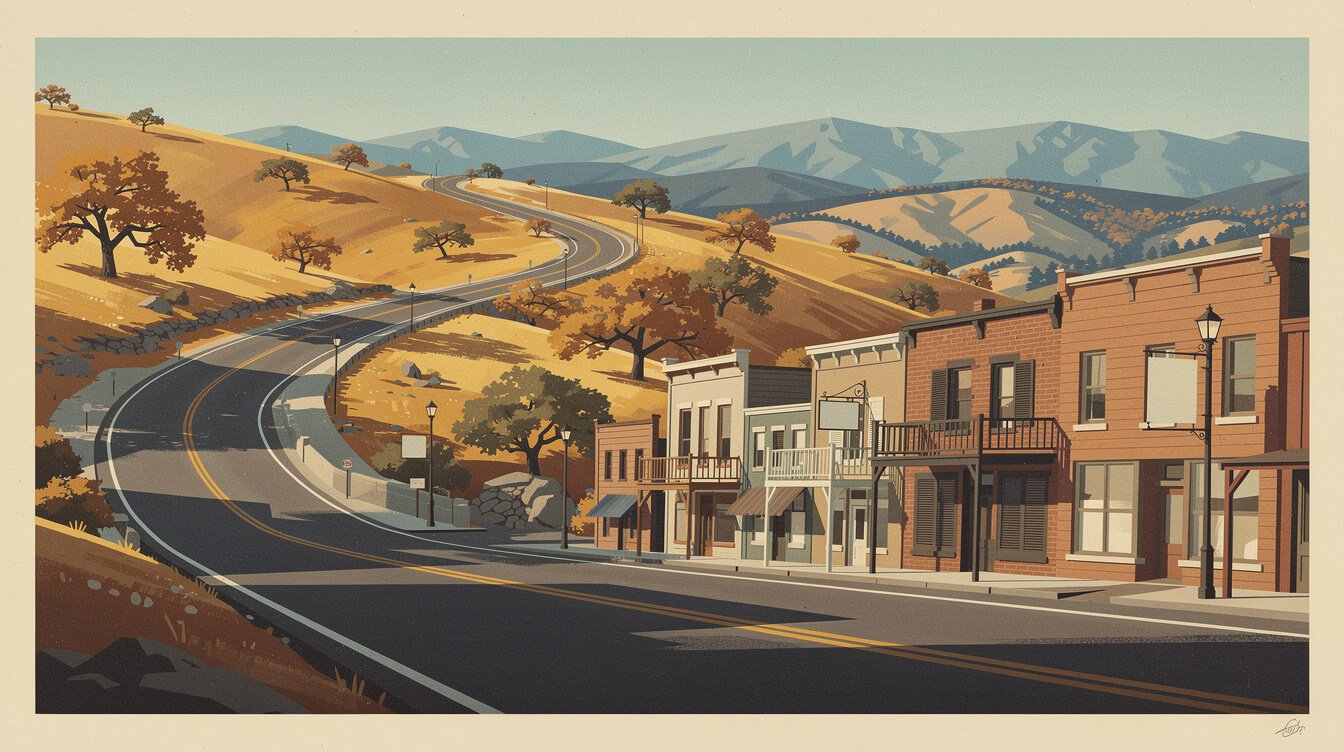
Gold Country is the western foothills of the Sierra Nevada, roughly from Nevada County in the north to Mariposa in the south, and Highway 49 runs the length of it. Dozens of towns along that road have a Gold Rush origin story. That alone doesn’t make one worth a weekend. So every town on this list got judged on four things:
- Is it still a town? People live there, businesses open on a Tuesday, and the historic buildings hold something besides souvenirs.
- Walkability. Can you park once and spend the day on foot?
- The real history. Original buildings, not reproductions, and a story you can actually check.
- What’s around it. Rivers, caves, sequoias, vineyards, orchards. A good Gold Country town is also a good base camp.
Two famous names are missing on purpose. Placerville and Auburn are bigger and busier, and they’re better as places you pass through on the way to somewhere on this list. Sonora gets folded into the Columbia and Jamestown entries, because it’s the service town for both and it’s where you’ll likely eat dinner.
1. Nevada City: the best small town in Gold Country
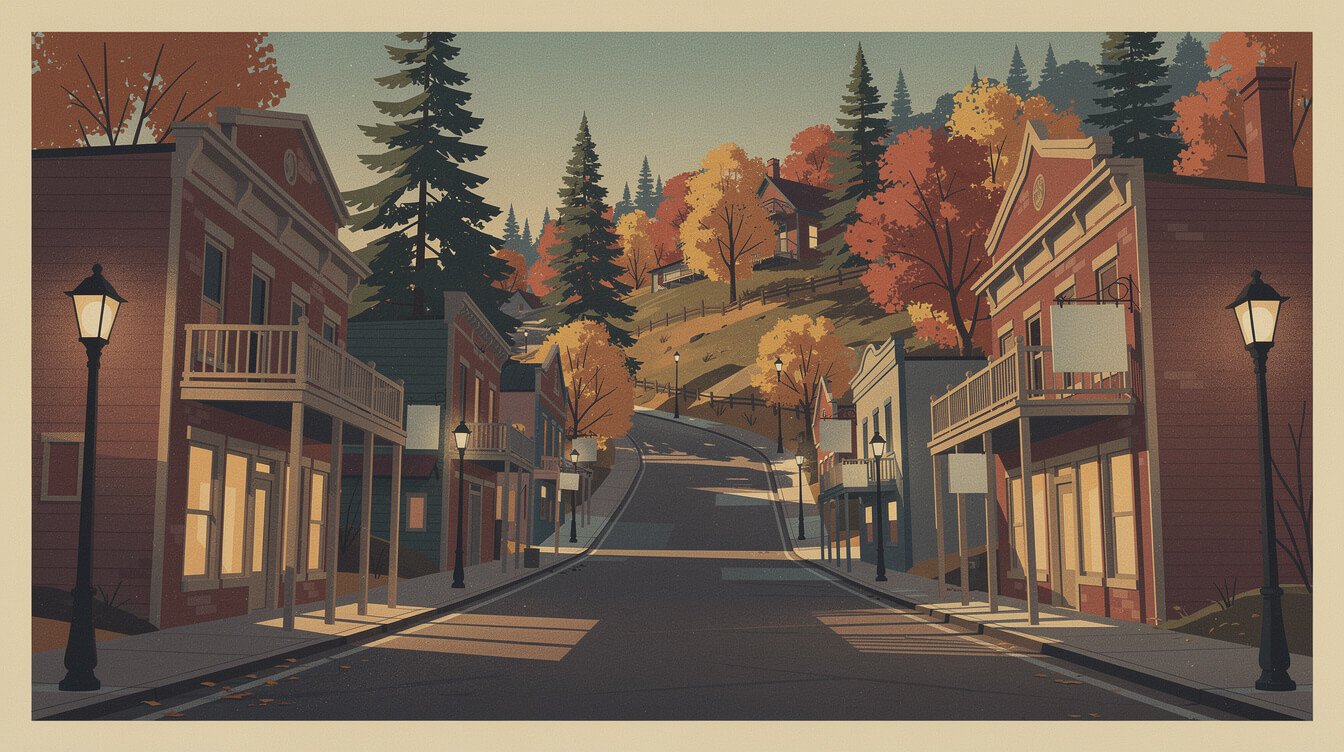
Nevada City sits at 2,477 feet, about 60 miles northeast of Sacramento, and it has roughly 3,152 residents according to the 2020 census. It was settled in 1849 and incorporated in 1856. The “City” got added to the name in 1864, after the new state next door took “Nevada” for itself. That’s the kind of detail the town is full of.
Why it wins: Nevada City is the only town on this list that feels like it would be exactly the same if every visitor went home tomorrow. Broad Street climbs a hill between two-story brick and clapboard buildings with balconies, and the businesses on it are the ones locals use. Bars where people know each other, restaurants that aren’t built around a tour bus, and shops that stay open in the off-season.
The Nevada Theatre
The anchor is the Nevada Theatre on Broad Street. It opened on September 9, 1865, and it’s California’s oldest existing theater building. Mark Twain lectured from its stage during his speaking-circuit years, and Jack London came through later. It still runs shows and films today. Check the calendar before you go and build your night around whatever’s on.
What to do
- Walk the downtown historic district. Start at Firehouse No. 1, now a museum, and work your way down Broad Street and the side streets off Commercial.
- Go to the river. The South Yuba River is close by, and its green pools and granite slabs are the local answer to a hot afternoon. In late September the water is lower and calmer, and the summer crowds are gone.
- Cross to Grass Valley. The sister town next door has Empire Mine State Historic Park, one of the richest hard-rock gold mines in the state, preserved with its cottage and gardens.
Insider timing
Fall is Nevada City’s best season. The hardwoods on the hillside streets turn red and gold, the evenings cool off, and the town isn’t packed yet. Come back in December if you want the opposite: the Victorian Christmas street fair fills Broad Street with carolers and roasted chestnuts, and it’s crowded in the best way. The town also hosts the Wild & Scenic Film Festival every winter (it started in 2003) and the Nevada City Classic bike race, which has run since 1960.
Why it beats Murphys: Murphys has the better single street for a day of wine. Nevada City has the better town for a whole weekend, with more to do after the tasting rooms close.
2. Murphys: the Main Street with more tasting rooms than stoplights
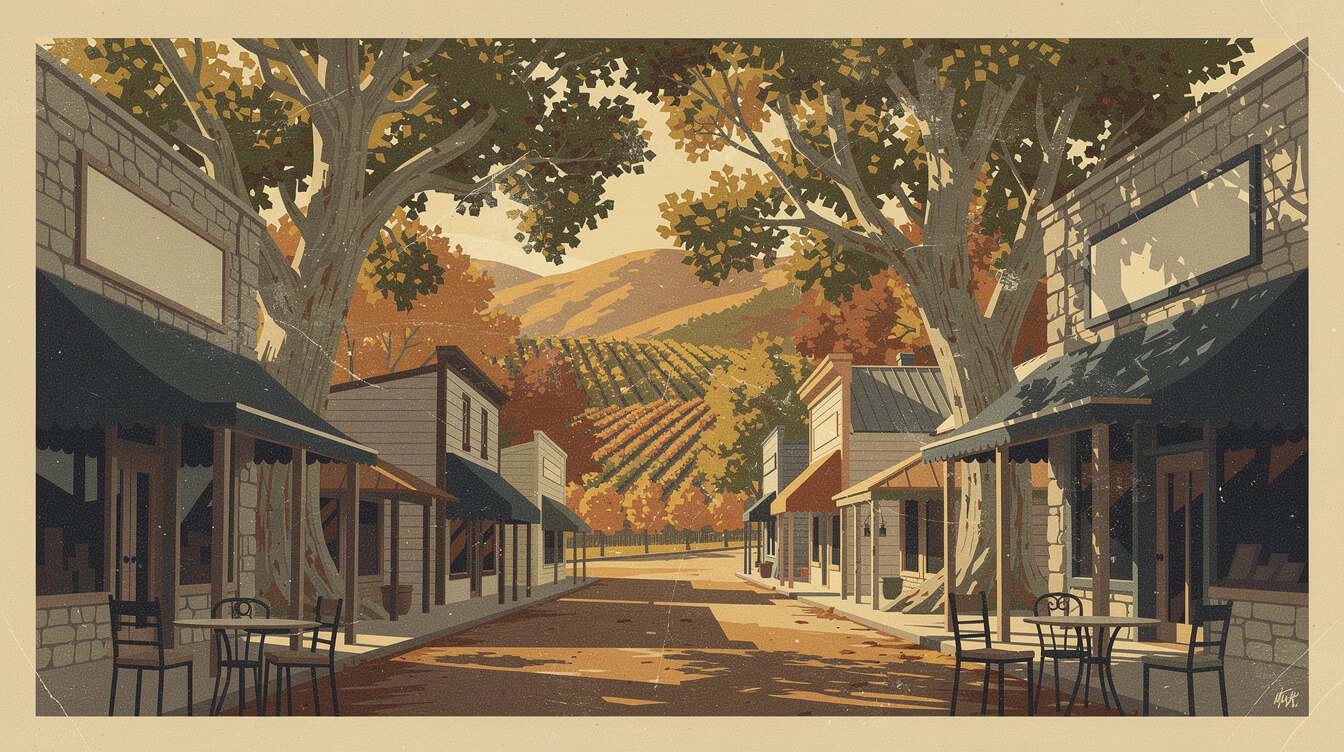
Murphys sits at 2,172 feet in Calaveras County, off Highway 4, with about 1,995 people. John and Daniel Murphy set up a trading post and mining camp here in 1848, and the place was called Murphys New Diggings for years. Today it’s the wine town of the southern Mother Lode, and it’s not subtle about it: more than two dozen tasting rooms sit along Main Street, all close enough to walk between.
What keeps Murphys from being just a wine strip is the old bones under it. The Murphys Hotel on Main Street opened on August 20, 1856, as the Sperry and Perry Hotel, and it’s one of the oldest continuously operating hotels in California. Copies of its original register hang in the lobby, with signatures from Mark Twain and Ulysses S. Grant. Down the street, the Peter L. Traver Building is the oldest stone building in town and houses the Old Timers Museum. And Albert Michelson, who in 1907 became the first American to win a Nobel Prize in the sciences, spent part of his childhood here.
What’s around it
- Mercer Caverns, just north of town, was discovered in 1885. It’s a steep stair descent past crystal formations, and it stays cool when the valley bakes.
- Calaveras Big Trees State Park is a short drive up Highway 4. The North Grove Loop is a flat, easy walk through giant sequoias and past the stump of the Discovery Tree, the tree that made the grove famous.
- Ironstone Vineyards, just south of town, displays what it bills as the world’s largest crystalline gold leaf specimen.
Insider detail
The varietals up here lean Rhône and Italian: zinfandel, barbera, syrah, grenache. Pick three or four tasting rooms instead of trying to do the whole street, eat something in between, and walk to the creek park behind Main Street to reset. If you’re coming in March, the Irish Day parade can draw more than 35,000 people into a town of 2,000. Plan accordingly, or plan around it.
Why it’s #2 and not #1: Murphys is better as a day than a weekend. It’s quieter at night, and it depends more on visitors than Nevada City does.
3. Sutter Creek: the best base for Amador wine country
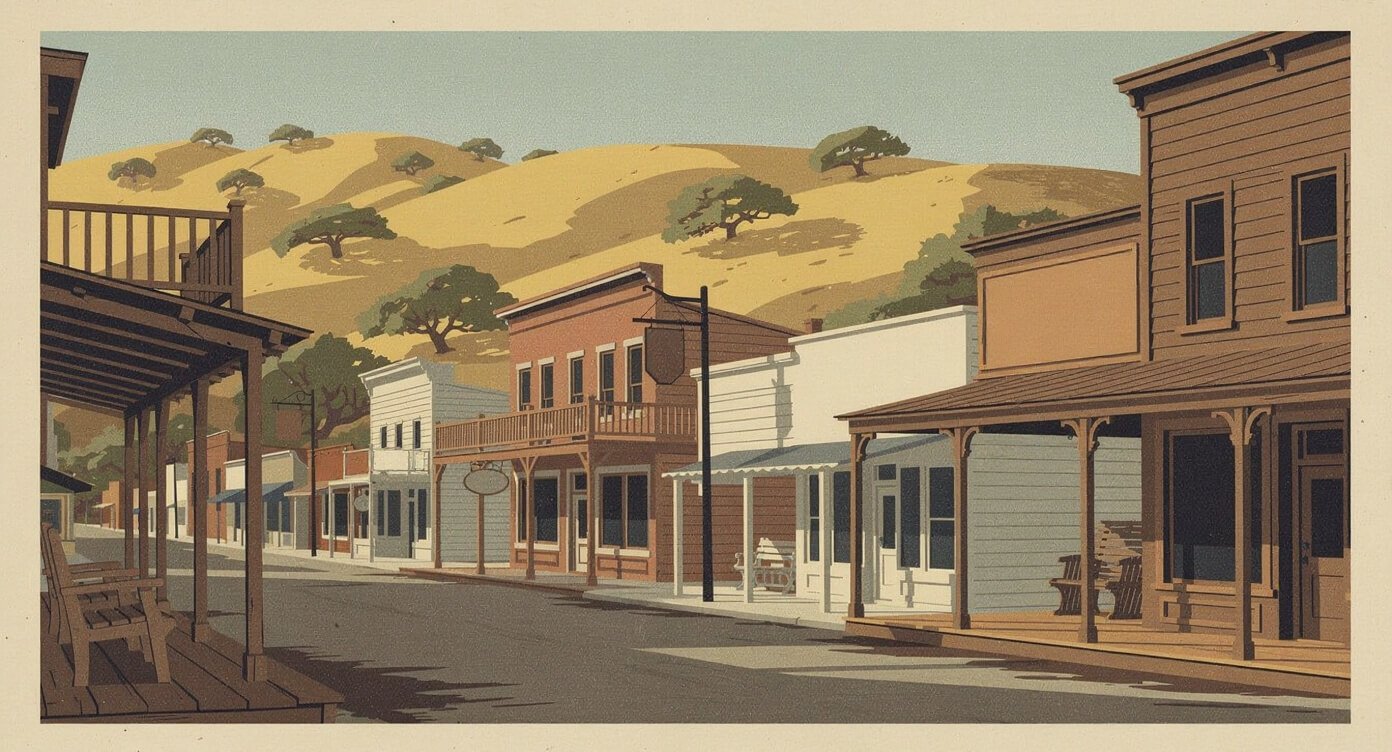
Sutter Creek takes its name from John Sutter, whose sawmill at Coloma set off the Gold Rush. The town got a post office in 1852, became a town in 1854, and incorporated in 1913. It has about 2,646 residents, and the whole town is California Historical Landmark #322.
The gold here was in quartz, not creek gravel, and that made Sutter Creek a hard-rock mining town. Quartz was discovered in 1851. The Central Eureka mine started in 1869, reached the 2,300-foot level by 1932, and was the best-paying mine in town by 1939. Mining stopped in 1942, when World War II pulled the manpower away.
Knight Foundry
The detail most visitors miss is Knight Foundry, founded in 1873 to build and repair equipment for the mines and timber mills of the Mother Lode. It ran continuously for 123 years, until 1996, and it’s believed to be the only remaining water-powered foundry and machine shop in the United States. Samuel Knight designed a high-speed cast iron water wheel here that was a forerunner of the Pelton wheel. A 42-inch Knight wheel still drives the main line shaft. Tours run on select days, so check before you go.
Why it ranks here
Main Street is Old Highway 49, lined with covered wooden sidewalks and balconies, and it’s the most photogenic stretch of the southern half of the route. Sutter Creek is also the most practical base for Amador County. The Shenandoah Valley wineries around Plymouth are a short drive north, Amador City is two miles up the road, Jackson is next door, and the tiny hill town of Volcano is a pretty drive east.
The whole stretch from Amador down through Calaveras and Tuolumne is 209 country, same area code as Stockton and Modesto down in the valley. If you want a shirt that says so, our In the 209 We Trust Stockton Pride T-Shirt covers the valley and the foothills in one line.
Why it’s behind Murphys: fewer reasons to leave the car parked all day. Why it’s ahead of Columbia: it’s a living town, not a museum.
The Buzz, weekly
Know what's buzzing before everyone else does
One email a week: what's blooming, what's opening, what's worth the drive, and new designs from the shop. No spam. Unsubscribe anytime.
4. Columbia: the best-preserved Gold Rush town in California
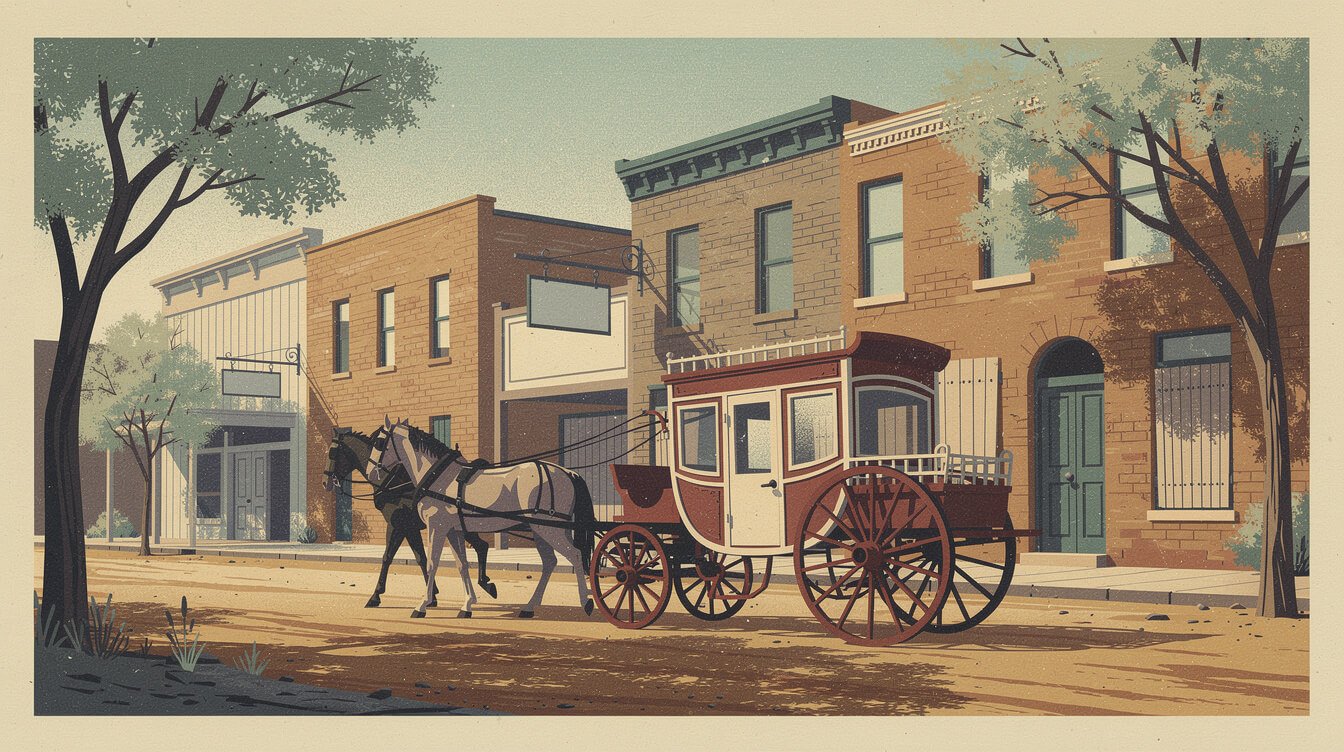
On March 27, 1850, John Walker, part of Thaddeus and George Hildreth’s party, found gold in what became Columbia. The camp was known as Hildreth’s Diggings, and it turned out to be one of the richest strikes of the entire Gold Rush. The town incorporated in 1854 and held somewhere between 2,000 and 5,000 people through the 1850s. By 1858 miners had finished a water ditch system that cost more than a million dollars at the time.
Columbia became a state historic park on July 15, 1945, and a National Historic Landmark in 1961. Almost 30 of its Gold Rush buildings still stand. Nowhere else in California comes close to that many originals in one place.
What it’s like
The downtown works as an open-air museum you can walk into. Main Street is closed to cars for much of the year, except for the stagecoach. Shopkeepers in period dress run candy counters, a blacksmith shop, and a photo studio, and you can pan for gold in a trough. It’s great with kids, and it’s better than it sounds for adults, mostly because the buildings are real. The brick, the iron shutters, and the doors are the actual 1850s article.
Insider detail
Go early on a weekday morning, before the school groups arrive, and walk the back streets before Main Street. Then drive a few minutes south to Sonora for lunch. Sonora is the Tuolumne County seat and the practical center of the southern Mother Lode, with far more places to eat and sleep than Columbia or Jamestown.
Why it’s #4: Columbia is the best history on this list, full stop. It drops below Sutter Creek because when the shops close, it’s a park, not a town. Stay in Sonora, and treat Columbia as your morning.

In the 209 We Trust Stockton Pride T-Shirt
Bold stacked lettering for the area code that runs from the valley floor up through Sutter Creek, Murphys, Columbia, and Jamestown. Good for a Highway 49 weekend and for proving you know where the 209 actually goes.
5. Jamestown: the town that played the Old West on TV
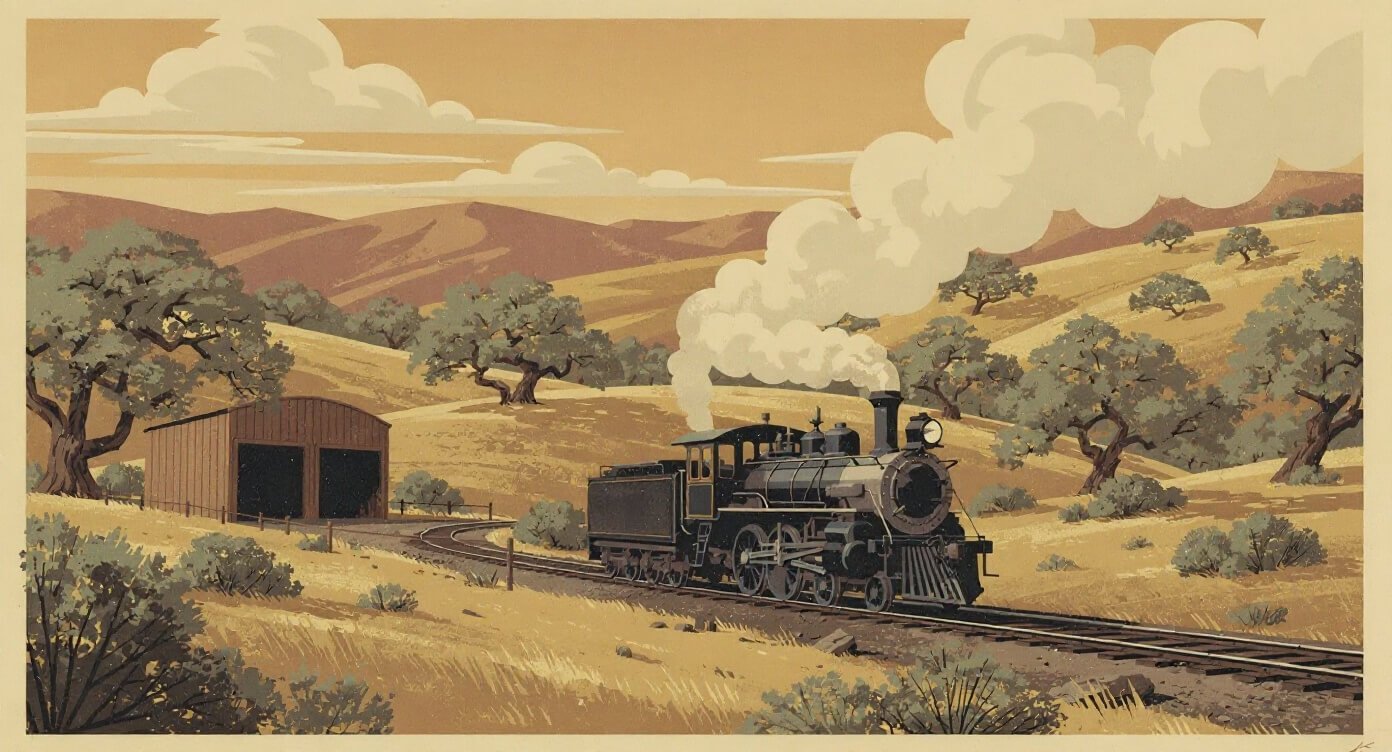
Jamestown, which locals have called Jimtown since the Gold Rush, sits a few miles south of Sonora at 1,621 feet, with about 3,478 people. Its Main Street is smaller than Sonora’s, with fewer shops and restaurants. The trade-off is that its old storefronts and hotel balconies look much closer to how they did 150 years ago.
Railtown 1897
The reason to come is Railtown 1897 State Historic Park, the old Sierra Railway shops and roundhouse. The roundhouse is still a working shop, and on scheduled days the park runs excursion trains into the foothills. Its star is Sierra Railway No. 3. That locomotive and the line around Jamestown have been in a long list of Westerns and TV shows: Petticoat Junction, The Wild Wild West, the pilot for The Big Valley, Clint Eastwood’s Pale Rider, Back to the Future Part III, and Hidalgo. If you’ve watched a train come around a golden hill in a Western, there’s a decent chance it was here.
The gold is not all history
Jamestown’s mining didn’t end with the forty-niners. The Harvard mine, discovered in 1859, produced about 800,000 ounces of gold before it finally closed in 1994. That’s well inside living memory, and it makes the town’s history feel less like a costume.
Why it’s #5: Railtown is the best single attraction in the southern Mother Lode for anyone who likes machines. But Jamestown is a half day, not a weekend, and it’s best done as a pair with Columbia, with Sonora as the base.
6. Amador City: the smallest city in California
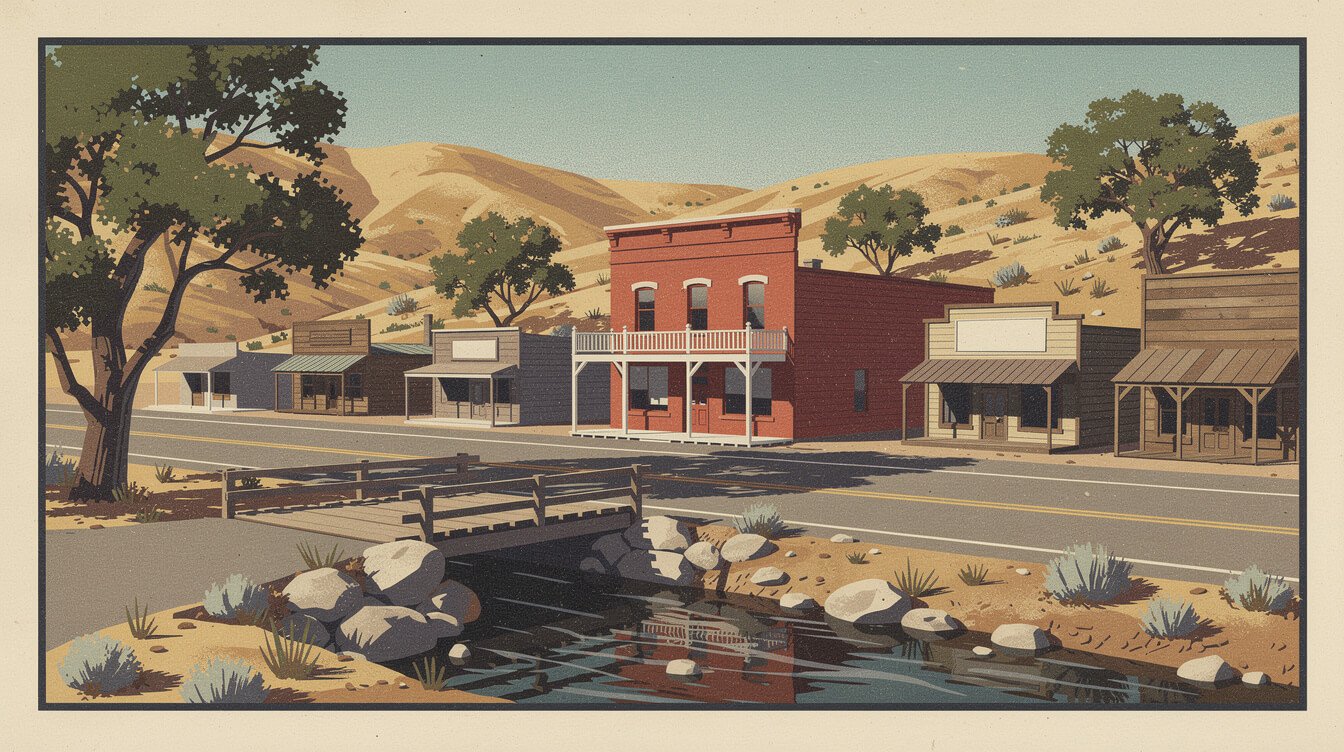
Amador City is a real, incorporated city (since June 2, 1915) with a population of 200. That makes it the least populous city in California, and at about 0.3 square miles, it’s also the smallest by area. It’s named for José María Amador, a Californio who found gold in the area in 1848. Gold panners settled the spot in 1849.
The town is essentially one block of Old Highway 49, two miles north of Sutter Creek. The red brick Imperial Hotel is the landmark, a good example of the historic brickwork you see all over the Mother Lode. A bridge replacement finished in 2014 cleaned up the center of town, and the handful of antique shops and small businesses along the block make for a nice 45-minute stop.
Why it’s #6: Amador City is charming, and it’s also over before you’ve finished your coffee. Treat it as a stop on the way to or from Sutter Creek, not a destination. It ranks on this list at all because nowhere else lets you say you walked the entire length of a California city in five minutes.
7. Coloma: where the Gold Rush started
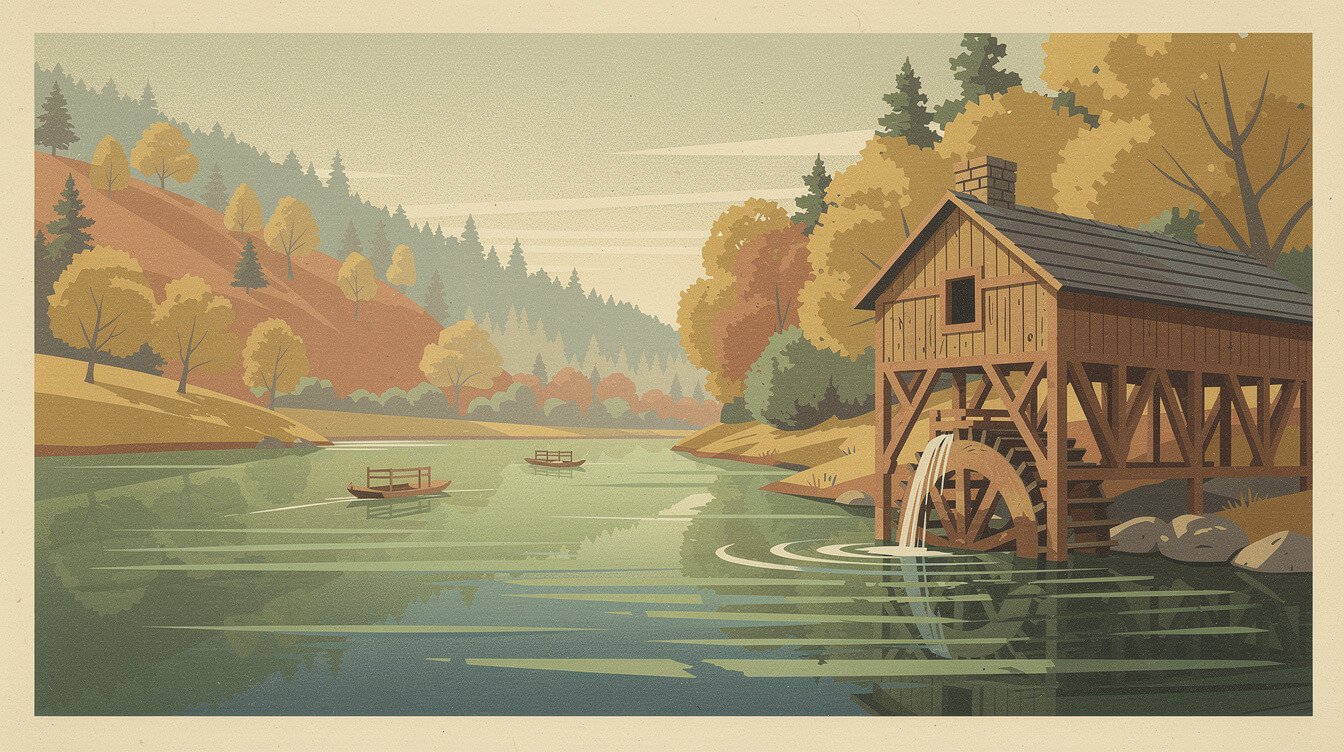
On January 24, 1848, James Marshall spotted gold in the tailrace of the sawmill he was building for John Sutter on the South Fork of the American River. Nearly everything else on this list exists because of that moment. Today Coloma is a hamlet of about 521 people, 36 miles northeast of Sacramento. Its name comes from the Nisenan word Cullumah, meaning “beautiful.” It’s been a National Historic Landmark District since 1961.
Most of the town is Marshall Gold Discovery State Historic Park. There’s a full-size replica of Sutter’s Mill near the discovery site, a scattering of original buildings, and a monument to Marshall on the hill above. The river has since become one of the most popular whitewater runs in the country, and in summer the put-ins are busy with rafting outfitters.
The fall move
Coloma ranks last as a town, because there isn’t much of one. It ranks on the list because in fall it’s part of the best half-day in Gold Country. Take Highway 49 south from Coloma to Placerville, then head up to Apple Hill in Camino. More than fifty family farms, bakeries, cideries, and wineries there open from Labor Day weekend through December. Late September and October are peak: u-pick apples, cider doughnuts, and hay bales. Go on a weekday. Weekends in October are bumper to bumper.
Frequently asked questions about Gold Country’s best small towns
What is the best small town in Gold Country?
Nevada City. It has the most complete downtown, the most to do after dark, a working 1865 theater, and the South Yuba River nearby. Murphys is a close second if your weekend is mostly about wine.
When is the best time to visit Gold Country?
Fall and spring. From late September through November you get harvest season in Amador and Calaveras, apples at Apple Hill, fall color in Nevada City, and afternoons that aren’t 100 degrees. Spring brings green hills and wildflowers. Summer is hot in the lower foothills, and that’s river season.
Can you see several Gold Country towns in one trip?
Yes, and that’s the point of Highway 49. A long weekend covers the southern half: stay in Sutter Creek one night (with Amador City on the way) and in Sonora the next (with Columbia and Jamestown), and take Highway 4 to Murphys in between. Nevada City and Coloma pair up for the northern half.
Which Gold Country town is best for kids?
Columbia, easily: stagecoach, gold panning, candy counters, and no cars on Main Street. Railtown 1897 in Jamestown is a close second for kids who like trains.
Is Gold Country a day trip from the Bay Area?
Coloma and Sutter Creek are the most doable as day trips from the Bay Area or Sacramento. Nevada City, Murphys, and the Sonora-area towns deserve an overnight. If you want more foothills-to-mountains driving, keep going up Highway 4 past Murphys and over Ebbetts Pass (in season) toward the east side, where the best hot springs in the Eastern Sierra are waiting.
Final thoughts: if you only visit one small town in Gold Country
Make it Nevada City, and give it a whole weekend. Walk Broad Street, catch whatever’s playing at the Nevada Theatre, and spend an afternoon on the South Yuba. If you’ve got a second weekend, go south: Sutter Creek and Amador City on Saturday, Murphys on Sunday, and save Columbia and Jamestown for the trip after that.
These towns have been running on the same Main Streets since the 1850s, and the good ones never turned into museums. That’s what makes them worth the drive. Got a Gold Country town you think we ranked wrong? We’d like to hear the argument. And if you’re planning a road trip at the other end of the state, our list of the best fish tacos in San Diego is the other half of the map.
Before you go
Get the next ranking in your inbox
We write one of these every day. The best of them, plus whatever California is texting about this week, lands in one short email.
2 Comments