
Nimbus Fish Hatchery and the salmon run: where to see it this November, ranked
The salmon are back on the American River, and the best place to see them this week isn’t inside the Nimbus Fish Hatchery. It’s the gravel bar just downstream. The Nimbus Fish Hatchery visitor center, the one with the viewing windows every Sacramento kid remembers from a field trip, is still closed “until further notice” as of November 1, 2026. The river doesn’t care. Fall-run Chinook are pushing up from the Golden Gate right now, and from early November to mid-December they spawn in the riffles below Nimbus Dam, where anyone with a pair of sunglasses can watch for free.
So this is a This Week guide with a ranking: what’s actually open, where to stand, and when to go. We checked every spot below against the state and county agencies that run them in the last week of October 2026. Where we couldn’t confirm something, we say so.
Is the Nimbus Fish Hatchery open? The November 2026 status

Short answer: the hatchery is working, and the visitor center isn’t open to the public.
The Nimbus Fish Hatchery sits at 2001 Nimbus Road in Gold River, off Highway 50 about 18 miles east of downtown Sacramento. Take Hazel Avenue north, turn left on Gold Country Boulevard, and the lot is on the right. The federal Bureau of Reclamation owns the building, and the California Department of Fish and Wildlife (CDFW) runs the hatchery. CDFW’s page currently says it “is unable to open the Visitor Center until further notice” because of changes in how the building is operated and maintained, and that the two agencies are working on a reopening date. A September reopening was called off days before it was due, KCRA reported on September 5.
Here’s what that means for you this month:
- The fish ladder. CDFW typically opens it in the first week of November, once the river cools to around 60 degrees. It isn’t a fixed date. In 2023 low oxygen in the water pushed the opening to November 3, and Reclamation’s August 2026 river notes flagged oxygen in the basin below the dam as “beginning to approach the stress threshold” for adult Chinook. As of this morning, we can’t find a 2026 opening announcement.
- The viewing windows and spawning room. Both are inside the visitor center, so plan on not seeing them until it reopens.
- The parking lot and grounds. CDFW’s page lists the lot as open daily, but a September news report said the lot was closed along with the building. The two don’t agree, so check CDFW’s Nimbus page or the hatchery’s Facebook page before you drive out, or call the visitor line at 916-358-2884.
None of this changes what’s happening in the water. The salmon still come to Nimbus, because they can’t go any farther. Nimbus Dam has blocked the river here since 1955, and that’s exactly why the river right below it is the best free salmon viewing in the Sacramento area.
Why the salmon come back to the American River in November

These are fall-run Chinook salmon, and most of them are three years old. They left the American as fingerlings, spent about two years in the Pacific, and are now finishing a trip that runs under the Golden Gate, through the Delta, up the Sacramento River, and right at the confluence at Discovery Park into the American. That’s the two rivers of Sacramento, and the salmon use both.
By the time they reach Gold River, they’ve stopped eating and changed color. The silver ocean fish turns olive-brown to dark maroon, and the males grow a hooked jaw. Most are around two to three feet long. A few smaller two-year-olds, called jacks, come back early with them.
When she’s ready, the female turns on her side and digs a nest in the gravel with her tail. That nest is a redd, and on a clear day it looks like a pale, scrubbed oval on the riverbed. A male stays close and guards it. After spawning, both fish die within days to weeks. That’s the whole design: the carcasses feed the river, the gulls, the vultures, and the next generation of everything.
The Sacramento system actually has four Chinook runs: fall, late-fall, winter, and spring. Winter-run is listed as endangered and spring-run as threatened. Fall-run is the big one, the one the hatcheries support and the ocean fishery depends on, and it’s the one you’re watching this month. Spawning on the lower American typically runs from early November to mid-December and peaks in the middle-to-late part of November.
One thing people get wrong: there are no salmon in Lake Natoma. The lake sits behind Nimbus Dam, and nothing gets past the dam. If you want fish, stay downstream.
The best places to see the salmon run near Sacramento, ranked

We ranked on three things: are fish reliably there this month, can you actually see them without wading, and is it open right now? A spot with the best fish and a locked door loses to a gravel bar you can walk onto today.
1. Upper Sunrise, American River Parkway (Gold River)
This is #1 because it’s the closest public riverbank to the dam, and it puts you above the water. Upper Sunrise is the county park access just upstream of the Sunrise Boulevard bridge, on the south bank. Drive past the boat launch on the paved road and walk to the bluff edge. From up there you can look straight down into the riffles and count fish. Sacramento Audubon names this stretch, with the hatchery, as the place to watch gulls, turkey vultures, and the occasional bald eagle working the run. If the birds are stacked up on the gravel, the salmon are there.
Insider detail: the view is the point. Stay on the bluff and the trails and don’t climb down onto the gravel bars. Every pale patch of gravel in November could be a redd with eggs in it.
2. Sailor Bar (Fair Oaks)
Sailor Bar comes in a close second, and on a good morning it beats #1. It’s a big county park access on the north bank, at the end of Illinois Avenue in Fair Oaks. The gravel riffle at the top of the bar is one of the densest spawning areas on the whole river, and in a strong year it holds hundreds of redds. It ranks second only because it’s a wider, flatter spot, so you’re looking across the water more than down into it, and glare matters more here. Bring polarized sunglasses.
Insider detail: Sacramento County’s parkway accesses charge a day-use vehicle fee at the gate, so plan on it. If you’re on a bike, the American River Bike Trail gets you in without one.
3. Nimbus Fish Hatchery (Gold River)
On a normal year this is #1 and it isn’t close. You can watch salmon climb the ladder step by step, look through underwater windows, and watch staff take eggs a few mornings a week from early November to mid-December. The hatchery normally raises about 4 to 4.5 million Chinook and close to half a million steelhead a year. This week, with the visitor center closed and no 2026 ladder date announced, it ranks third. The day CDFW announces the reopening, move it back to #1.
Insider detail: even in a normal year, CDFW often closes the gate at the bottom of the ladder to keep it from getting overcrowded, and it doesn’t announce when the gate will be open. If the ladder looks empty, that’s usually why. Walk the river below the hatchery instead.
4. Mokelumne River Fish Hatchery (Clements)
This is the best open hatchery within an hour of Sacramento, and most Sacramentans have never heard of it. It’s at the base of Camanche Dam at 25800 North McIntire Road in Clements, about an hour south of Sacramento by Highway 99 and Highway 12, and it’s open. CDFW runs a self-guided fish trail past the river, the ladder, and the raceways, and you can feed the young fish. On spawning days you can watch through a window, so call ahead to ask which days. Chinook spawn here from mid-October through late December, and the Mokelumne set record salmon returns in 2023. It ranks fourth because it’s a drive and the river views aren’t as good as the American’s. For families who want the full hatchery experience this month, it’s the answer.
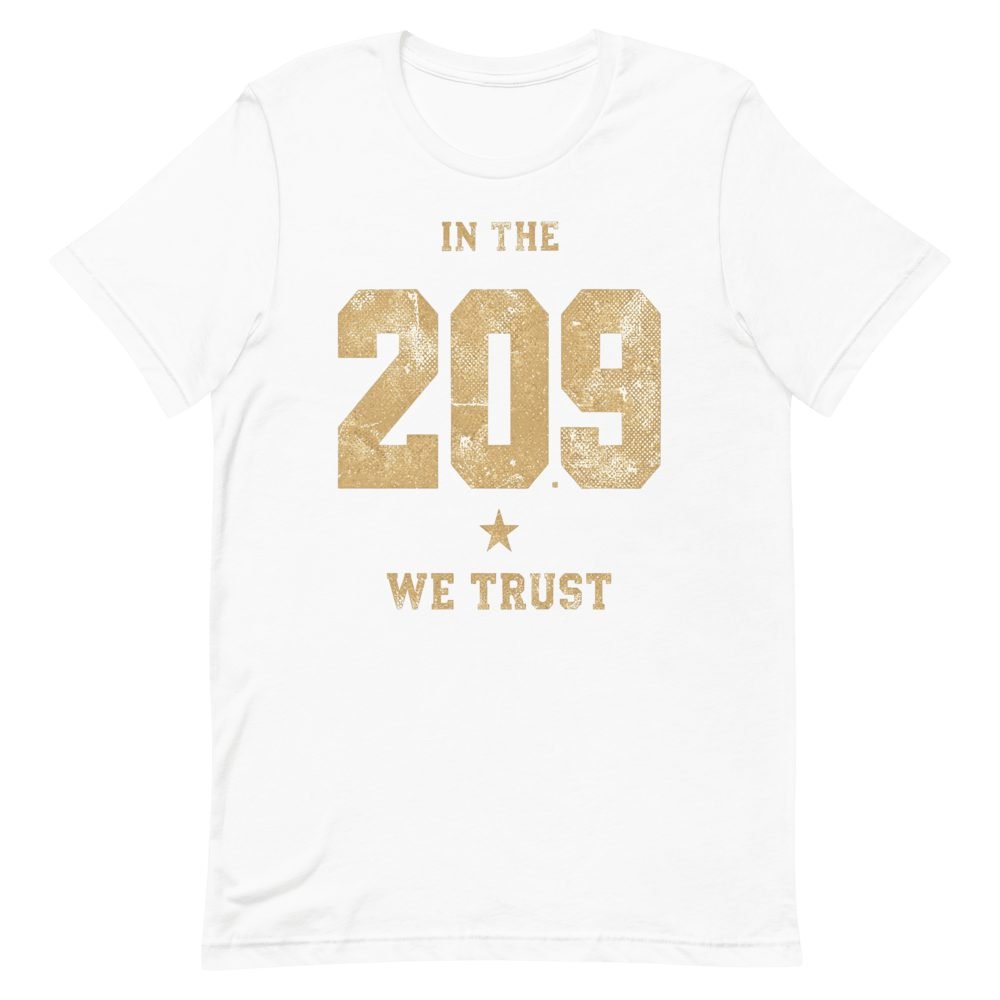
Clements is the 209, about 15 minutes east of Lodi’s tasting rooms, and that’s the shirt we wear on this drive: the In the 209 We Trust Stockton Pride T-Shirt. If you want to make it a day, our Lodi wineries ranking covers what’s on the way back.
5. Effie Yeaw Nature Center (Carmichael)
Effie Yeaw sits inside Ancil Hoffman Park, at 2850 San Lorenzo Way, and CDFW lists it as a fall salmon-viewing spot. Take the Main Trail about half a mile to the rocky beach, and look for fish in the riffles. It ranks fifth because the views are farther away and less reliable than at Sunrise or Sailor Bar. It also has the parkway’s best walking trails, with deer on the trail and a nature center that just turned 50 in October. We don’t see a salmon walk on its November or December calendar, so don’t count on a guided program.
6. Feather River Fish Hatchery (Oroville)
A little over an hour north of Sacramento, the Feather River hatchery at 5 Table Mountain Boulevard is open and its ladder has been running since September. The state Department of Water Resources says it’s expected to stay open through June 2027. Walk across Table Mountain Boulevard to the barrier dam overlook and you’ll see salmon jumping. Underwater windows show fish in the ladder. It ranks sixth for timing: Feather River spawning runs from mid-September to mid-November, so you’re catching the tail end this week. Go soon. The Oroville Salmon Festival already happened, on September 26.
7. Coleman National Fish Hatchery (Anderson)
Coleman, on Battle Creek in Shasta County, is the biggest show in the state when it’s peaking, but that’s October. Fall spawning there runs from early October to mid-November, so early November is the last call. The Return of the Salmon festival was October 17. It ranks last for Sacramento readers because it’s more than two hours up I-5. If you’re already in Redding, go, and add the Clear Creek Gorge Overlook, where the Bureau of Land Management says you can watch fall-run spawning from above through about December 1.
Later in the season: once the Chinook are done, the coho start. Lagunitas Creek in Marin, around the Leo T. Cronin Fish Viewing Area at Shafter Bridge on Sir Francis Drake Boulevard, peaks in January, usually one to three days after a good storm. It’s a different fish, a different watershed, and its own trip.
Visiting Nimbus Fish Hatchery with kids

Nimbus is the field trip of a Sacramento childhood: the ladder, the windows, and the little feed dispensers at the raceways. When it’s open, it’s free, and it’s the best hour you can spend with a five-year-old in Sacramento County. CDFW’s visitor guide describes the full setup: underwater viewing windows on the ladder, a spawning-room window inside the visitor center, a front pond for close looks at big fish, raceways full of juveniles, and a quarter-mile, fully accessible River Discovery Trail with an observation deck over the redds. Gulls and cormorants line up on the cable across the river during the run. CDFW’s own guide says the birds “often know the salmon have returned before we do.”
That’s the plan once the doors reopen. For this month, here’s how to give kids the same experience:
- Start at Upper Sunrise, not the hatchery. The bluff gives kids a clear look down at real fish, which beats a closed door. Hold small hands near the edge.
- Bring polarized sunglasses for everyone. They’re the difference between “I don’t see anything” and “there’s one, there’s another one.” Kids’ sizes exist, and they’re worth it.
- Talk about the carcasses before they see one. Dead salmon on the bank are part of the run. Kids handle it fine when you’ve told them it’s the end of a three-year trip, not something going wrong.
- If they want the hatchery, drive to Clements. The Mokelumne hatchery (#4 above) has the raceways, the ladder, and the fish food, and it’s open. Call ahead to ask about spawning days.
- Keep it to the morning. Hatchery operations are a morning thing, and little legs are, too.
One thing hasn’t changed: CDFW still books free guided tours for school groups and groups of 15 or more through its online calendar, and it still does virtual tours by request. If you’re a teacher planning a spring trip, that calendar is the place to start.
The Buzz, weekly
Know what's buzzing before everyone else does
One email a week: what's blooming, what's opening, what's worth the drive, and new designs from the shop. No spam. Unsubscribe anytime.
Timing it right: weeks, hours, and water

The run doesn’t care about your weekend, but you can stack the odds.
The weeks
Spawning on the lower American runs from early November to mid-December. The middle and end of November usually show the most fish on the gravel. The first week of November is the opener: fewer fish, but the ladder news drops around now. Mid-December is the fade, with more carcasses than live fish and more birds than both.
The hours
Go from late morning to mid-afternoon. You want the sun high, so light goes down into the water instead of bouncing off it. Early morning fog over the river is beautiful, and the photo is worth getting, but you won’t see much under the surface until it lifts. Weekdays are quieter at Sailor Bar and Sunrise, and the parking is easier.
The water
Clear water and steady flows make for the best viewing. Folsom Dam releases control the lower American, and Reclamation projected releases of roughly 1,300 to 1,500 cubic feet per second for October and November. That’s a calm river, which is good news. After a big storm the water clouds up for a day or two and the fish are harder to see. Give it time to clear.
The rules
Fishing regulations change by section here. The stretch from just below the hatchery down to Ancil Hoffman Park, which includes Sailor Bar and Sunrise, is closed to salmon fishing in November and December to protect spawners. The basin right below the dam has been closed to all fishing in recent years. If you plan to fish anywhere on the river, check CDFW’s current Central Valley regulations first. If you’re just watching, stay off the gravel.
For the drive down to the Mokelumne
The open hatchery this November is in Clements, in the 209. This tee says so in big stacked numerals: dusty gold “209” with “In the” and “We trust” above and below, and a single star. It’s for the salmon morning that turns into a Lodi afternoon.
Fewer hatchery fish, a better ocean: what changed this year

You may have seen the headline last fall that Nimbus would “drastically reduce” its salmon releases. That’s real. CapRadio reported it in October 2025. Reclamation, which funds the hatchery, allocated about $2.5 million against the roughly $3.16 million needed, so the plan cut production about in half: around 2.25 million Chinook and 215,000 steelhead instead of the usual 4 million-plus and about 430,000. Nimbus fish make up the large majority of the lower American’s salmon, so the cut matters. We couldn’t find any 2026 report that the funding was restored.
Here’s what that does and doesn’t mean for your November. Salmon released as juveniles under a smaller program would mostly return a few years from now. The fish in the river this month were released years ago, so this fall’s run isn’t a verdict on the cuts either way.
And the wider picture is better than it’s been in a while. California’s ocean salmon season was closed in 2023, 2024, and 2025. For 2026, fishery managers forecast about 392,000 Sacramento River fall Chinook in the ocean, which is 137 percent above the 2025 projection and well above the five-year average. Ocean seasons reopened this spring, and CDFW reopened Central Valley river salmon fishing too. That’s not a full recovery, and nobody’s calling it one. It’s a fishery that had three years off and got a cautious yes.
If you want to help, the simplest things are also the nearest. Stay off the redds, pack out your trash, and if the visitor center reopens this season, go and bring people with you. Attendance is the easiest argument there is for keeping a place open.
Make a morning of it on the American River Parkway

The salmon are the reason to go. The parkway is the reason to stay.
Ride the trail. The Jedediah Smith Memorial Trail, the American River Bike Trail to most people, runs 32 miles from the confluence in Sacramento to Beal’s Point on Folsom Lake. It passes Sailor Bar, Sunrise, and the hatchery on the way. Park near Hazel Avenue and you can ride downstream past every spawning spot on this list, with the cottonwoods turning gold over your head. In November the trail is at its best: cool, quiet, and lined with yellow leaves.
Cross to Fair Oaks Village. The old steel truss Fair Oaks Bridge, built in the first decade of the 1900s and now for bikes and walkers only, drops you into Fair Oaks Village. The village is known for its free-roaming chickens, and they’re everywhere. It’s a two-minute stop that kids will talk about longer than the fish.
Go upstream to Folsom. Ten minutes up the road, Folsom Powerhouse State Historic Park is open Wednesday through Sunday. In 1895 it sent electricity 22 miles to Sacramento, an early feat of long-distance power, and the city threw a “grand electric carnival” to celebrate. Old Folsom’s Sutter Street is right there for lunch. If you’re turning it into a full Gold Country day, our ranking of the best small towns in Gold Country picks up where Folsom leaves off.
Eat first. Salmon viewing is a late-morning activity, which leaves the early part of the day for breakfast. Our guide to the best breakfast in Sacramento has the Land Park diners and the Midtown counters. Eat, drive out the 50, and be on the bluff when the sun gets high.
Nimbus Fish Hatchery FAQ
Is the Nimbus Fish Hatchery open right now?
As of November 1, 2026, the visitor center is closed until further notice while CDFW and the Bureau of Reclamation work out a reopening date. The hatchery itself is still running. Check CDFW’s Nimbus page or call 916-358-2884 before you go.
When does the Nimbus fish ladder open?
Usually in the first week of November, once the water is cool enough, but it depends on river conditions, and it has opened late in low-oxygen years. We haven’t seen a 2026 date announced yet.
Is it free?
The hatchery visitor center has always been free when it’s open, including parking. The county’s American River Parkway accesses, like Sailor Bar and Sunrise, charge a vehicle day-use fee.
When is the best time to see salmon on the American River?
Mid-to-late November, from late morning to mid-afternoon, on a clear day with polarized sunglasses. Spawning runs from early November to mid-December.
Can I see salmon in Lake Natoma or Folsom Lake?
No. Nimbus Dam blocks salmon from going any farther upstream. Everything happens below the dam.
Where else in California can I see salmon this fall?
The Mokelumne River Fish Hatchery in Clements is open, and the Feather River Fish Hatchery in Oroville is running into mid-November. Coleman National Fish Hatchery near Redding is past its peak. For coho, wait for January at Lagunitas Creek in Marin.
If you only do one thing this November
Drive out to Upper Sunrise on a clear weekday around noon, stand on the bluff with polarized sunglasses, and look down. You’ll see salmon that have come home from the Pacific to the exact stretch of gravel where they hatched, and you’ll see the gulls, the vultures, and maybe an eagle that came for them. It’s free, it takes an hour, and it’s the most California thing happening within 20 miles of the Capitol this month. If the Nimbus Fish Hatchery reopens before the run ends, go back for the windows.
Same season, different animal: our monarch butterfly grove ranking for Santa Cruz is peaking now, too, and if you missed October’s Mount Diablo tarantula season, it’ll be back next fall.
Before you go
Get the next ranking in your inbox
We write one of these every day. The best of them, plus whatever California is texting about this week, lands in one short email.